


_____ AI visibility tools vs GEO strategy
Why AI visibility tools are only the start
AI visibility tools are becoming a bigger part of how brands understand their performance across platforms like ChatGPT, Gemini, Perplexity and Google AI Overviews.
That makes sense if your customers are asking AI engines for recommendations, comparisons and advice. As a brand, you need to understand what AI tools know about your brand and whether you are mentioned, cited, or missed entirely.
But these tools are only the starting point. The value comes from knowing what to do with the data, which recommendations matter, and how to turn those insights into a strategy that can actually be delivered. This is where working with a specialist GEO agency can help.
What AI visibility tools can show you
From the AI visibility tracking tools we have tested, it is clear that they can give marketing teams a much stronger view of how their brand is appearing across AI search.
By tracking AI visibility, you are aware of which prompts your brand appears for, which competitors are being recommended, and which sources are being cited in AI-generated answers.
Here is a glimpse of that using LLMrefs. We asked the AI tool to help us fiind "subscription-based legal support services for business operations". There are 26 brands cited across 53 sources.
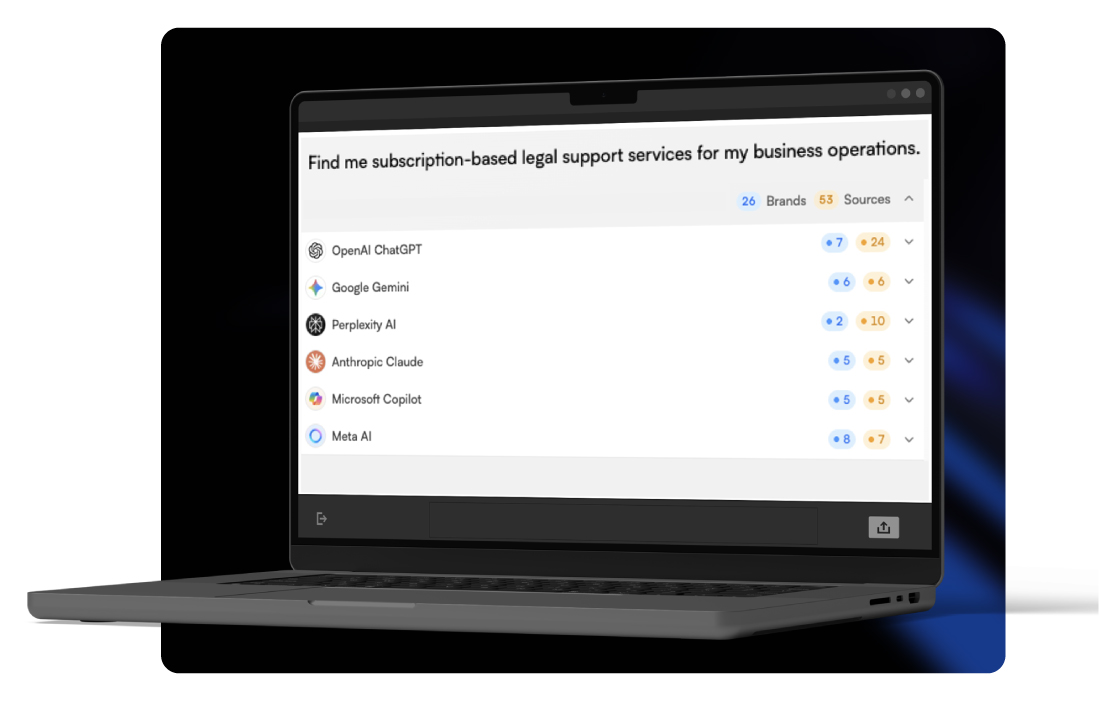
This kind of view might show that your competitor is being recommended for "best [service] provider" prompts that you are missing from. Or it might show that AI engines are citing third-party listicles, review sites or publisher articles where your brand doesn’t appear.
That insight is definitely useful. It gives you a clearer view of the lay of the land and helps identify where visibility is being lost. That said, knowing where the gap is does not automatically give you a roadmap for closing it.
Why AI visibility tool recommendations need human context
Many AI visibility tools now provide recommendations. Examples of recommendations could be:
- Creating new content
- Improving existing landing pages
- Targeting specific prompts
- Earning citations from specific sources
- Strengthening brand signals around particular topics
Even though this may appear to be a ready-made plan on the surface, these ‘recommendations’ don’t delve deep enough to give brands the context needed to act on them. This is one of the many common GEO mistakes we see when auditing. Let's break some of these down.
 Commercial relevance
For instance, a tool might flag a prompt as an opportunity because your brand is missing, but that does not mean it is commercially worth prioritising. The prompt may not reflect how your customers search, support a priority service or align with the areas you actually want to grow.
A content gap might actually be an authority gap, and a citation issue might be linked to poor third-party visibility - these are not things that can be fixed by simply making edits on your website.
Technical and internal feasability
There is also the question of feasibility. A recommendation may sound simple, but the work behind it could involve changes to crawlability, site architecture, page templates, schema, content production or internal approval processes.
Without understanding what is technically possible and what resources are available, it is difficult to know whether a recommendation is realistic or worth prioritising.
Brand fit
The same applies to brand fit. Some prompts may look like good visibility opportunities, but may not reflect how a brand wants to be positioned.
Appearing more often is not always the goal if the context is wrong, the audience is not relevant, or the recommendation pulls the brand into a space it does not want to own.
For example, if your brand is missing from "best" or "top" provider prompts, the answer may not be to create another service page. The stronger route may be to earn inclusion in the third-party sources AI engines are already using to form those answers. That is where human judgment is key.
Before acting on a recommendation, brands need to understand:
- Whether the opportunity is commercially relevant
- Whether the prompt reflects real buyer behaviour
- Whether the brand has the authority to compete
- Whether the gap is content-led, technical, authority-led or reputation-led
- Whether the recommendation is achievable with existing resources
- Whether it should be prioritised over other SEO or GEO activity
- How success will be measured beyond simply “appearing more often”
Without that layer of interpretation, brands can easily end up with a long list of recommendations but no clear route to impact.
Using an AI visibility tool already?
Reboot can help sense-check the recommendations, identify what matters most commercially and turn the outputs into a practical roadmap across SEO, GEO, Digital PR, and AiPR®.
Contact us
AI search is not separate from SEO
One of the biggest risks with AI visibility tools is treating AI search as a separate channel that can be fixed in isolation.
In reality, many of the signals that influence AI visibility are closely linked to the foundations of organic search, which means the right solution may need to address content, technical performance and authority together.
AI engines need to be able to access, understand, and trust the information they use, which means technical SEO, content quality, brand authority, digital coverage, third-party citations, internal consistency, and topical relevance are all important.
A brand that wants to improve AI visibility may need to strengthen service pages, improve crawlability, clarify its entity signals, secure more relevant coverage, earn inclusion in trusted third-party sources, create more useful supporting content, or build authority around specific topics.
The right answer depends on the problem, which is why AI tool recommendations need to be taken with a pinch of salt.
If an AI tool flags that your brand is not being recommended where it should, the issue could sit across several areas - such as:
- Your service pages are not clear enough
- Your site is difficult to crawl or understand
- Your brand is not appearing in trusted third-party sources
- Your competitors have stronger topical authority
- Your on-site GEO content does not answer the questions customers are asking
- Your brand is not being consistently described across the web
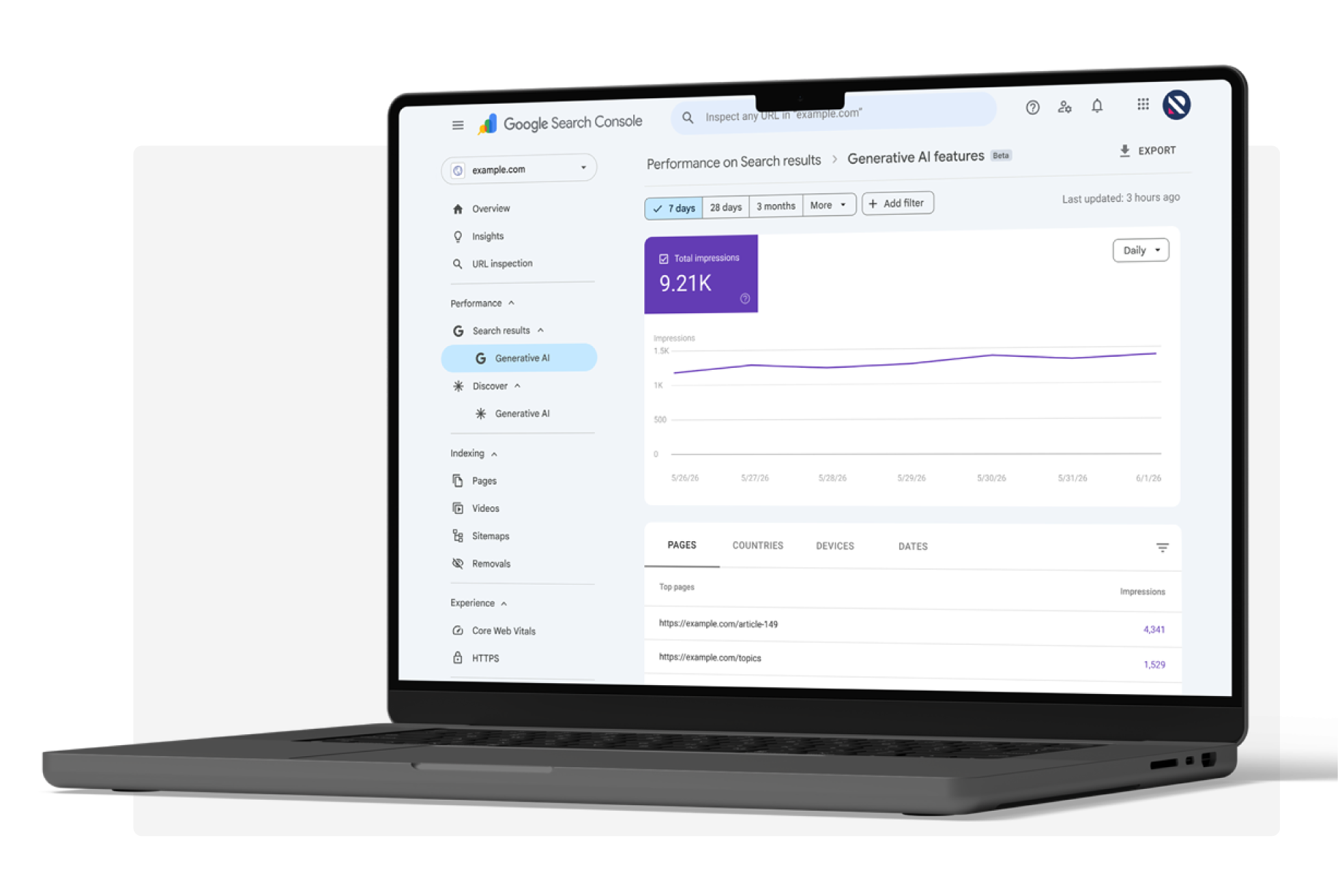
Your existing search data can also help identify potential AI visibility opportunities. For example, you can check AI visibility in Google Search Console to see which pages appear in Google's generative AI features and spot longer, more conversational queries that could inform GEO activity.
Always remember - a tool can help discover the problem, but it can’t always tell you which problem is worth solving first or how to solve it properly.
 Case study
A UK-based insurance company came to us to strengthen their association with 'unoccupied property insurance', as they weren't appearing in any AI recommendations for prompts around this topic.
We used AiPR® and context wrapping to secure relevant, high-authority third-party coverage on that topic, building offsite signals that AI engines could use to better understand and recommend the brand.
Read more about what we did to increase GEO traffic by 194.72%.
From AI visibility recommendations to a GEO roadmap
The challenge for most brands is not a lack of data, but knowing what recommendations to prioritise.
If a tool gives you 50 recommendations, which ones should happen first? Which will support commercial growth? Which needs technical SEO input? Which need Digital PR or AiPR®? Which can your internal team deal with, and where do you need specialist support? This is where a GEO agency adds value.
At Reboot, we use AI visibility data as part of a broader search strategy. The data helps show where a brand is being surfaced, missed or misunderstood, but the strategy comes from understanding why that is happening and what needs to happen next.
The questions we are asking are:
- Why is the brand missing?
- Does this opportunity matter commercially?
- What is stopping the brand from appearing?
- Which search signals need strengthening?
- What should be prioritised first?
- Who needs to deliver the work?
Where Reboot fits in
There’s no doubt about it, AI visibility tools are useful. For many of our clients, we start with an Opportunity Assessment to understand how they currently appear across traditional and AI search. To do this, we carry out a GEO audit and utilise third-party tools, such as LLMrefs and Peec AI.
From there, we turn these targeted GEO insights into a clear, prioritised activity roadmap across GEO, SEO, Digital PR, AiPR® and content. Taking into account your brand needs and the wealth of data at our fingertips, we explain which recommendations are worth acting on, which should be deprioritised, and what needs to happen to improve visibility where customers are now searching. And most importantly, why.
AI visibility tools can show where the gaps are, but the real value comes from knowing which gaps matter, why they exist, and how to close them.
Want to sense-check your AI search foundations?
Before acting on tool recommendations, it is worth checking whether your site gives AI engines the right signals in the first place.
Our LLM optimisation checklist is designed to help brands review the basics, from crawlability and content structure to brand understanding and authority signals.
Download the LLM optimisation checklist to see where your site may need support before turning AI visibility insights into action.

FAQs
What are AI visibility tools?
AI visibility tools help brands understand where they appear across AI search platforms, including ChatGPT, Gemini, Perplexity and Google AI Overviews. They can track brand mentions, citations, competitors, prompts and sources used in AI-generated answers.
Do AI visibility tools replace SEO or GEO strategy?
No. AI visibility tools can show where a brand is appearing or being missed, but they do not replace search strategy. Brands still need to understand which recommendations matter, what is causing visibility gaps, and how to prioritise activity across SEO, GEO, Digital PR, AiPR® and technical search.
What should I do with AI visibility tool recommendations?
AI visibility tool recommendations should be sense-checked before being actioned. Brands should consider commercial relevance, technical feasibility, brand fit, search intent, authority, resource and how each recommendation will be measured. Get in touch if you need help deciphering AI tool recommendations.
How can I improve AI search visibility?
Improving AI search visibility usually requires a mix of clear content, technical accessibility, strong brand signals, relevant third-party citations and wider organic search authority. The right approach depends on why the brand is being missed and which AI search prompts matter most commercially.