
Earn organic links from trusted, relevant sources
Because backlinks from authoritative, niche-relevant sites carry more SEO weight, they boost your site's credibility and rankings naturally.
Drive continuous SEO growth with content that earns links over time.
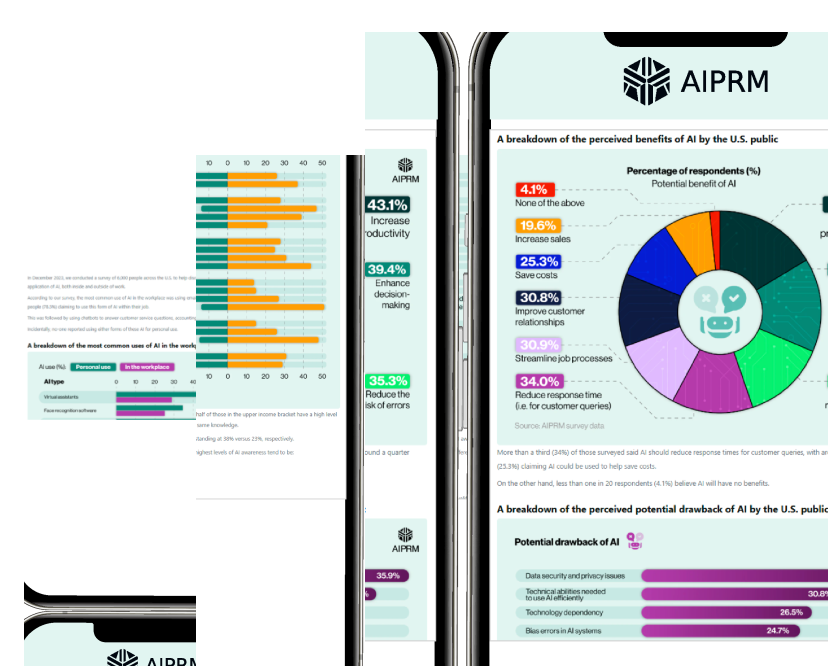
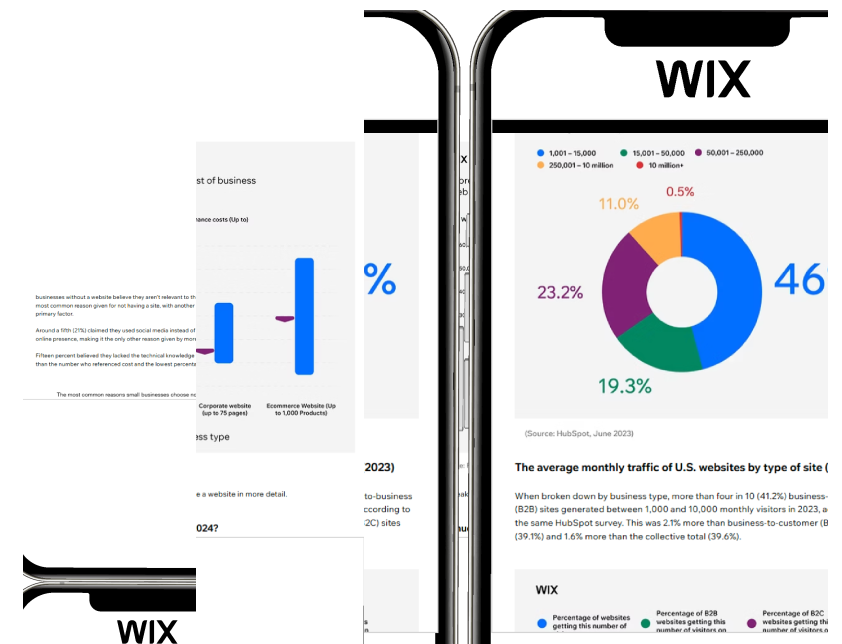
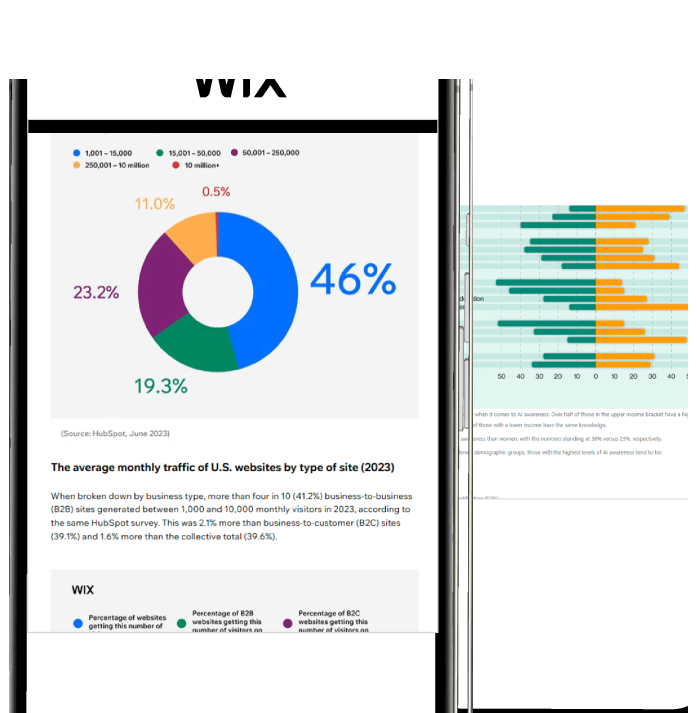
Hyper-Relevancy Projects (HRP for short) create data-led, evergreen content that earns relevant, quality backlinks, boosting topical authority and visibility in search and AI without ongoing outreach.



Because backlinks from authoritative, niche-relevant sites carry more SEO weight, they boost your site's credibility and rankings naturally.
By building recognised expertise in your industry, your site gains trust from search engines, leading to more stable and higher rankings over time.
Greater presence on both traditional search results and AI-driven platforms means more ways for potential customers to discover your brand.
We use a combination of industry-leading tools like Ahrefs and Google Trends, alongside our proprietary data insights, to identify topics and keywords with high journalistic potential - the types of terms your target journalists and content creators are actively searching for.
Our in-house PhD-qualified data team collects and creates primary datasets, enhanced by trusted secondary sources. This gives your content a standout edge.
We produce in-depth, evergreen content optimised for rankings and earning citations, with design and UX to match (maximising reader retention and link potential).
As a digital PR agency, we can also run digital PR campaigns to build initial momentum, drive early coverage, and secure high-authority links.
Once the asset is live and indexed, it continues to earn links passively, building stronger rankings and attracting even more backlinks over time.
Everything you need to build authority that lasts:
We validate every link using our Relevancy Rating™ tool, which scores backlinks out of 100 based on contextual signals such as topical overlap, audience match and authority alignment. This allows us to measure the true SEO weight of each link, not just count them.
Use our Relevancy Rating™ toolOn average, each HRP delivers:
A Hyper-Relevancy Project (HRP) is a long-form, data-led content asset designed to earn relevant, high-authority backlinks over time. It targets keywords with journalistic intent, making it easy for journalists, bloggers, and industry sites to find, reference, and link to your content.
Once published, it attracts links passively, boosting rankings, topical authority, and visibility in both search engines and AI results.
It's not a case of one or the other - they work best together. Our Hyper-Relevancy campaigns create evergreen, link-worthy resources that earn links over time, while Digital PR provides an initial burst of high-quality coverage to help the asset gain early traction in the SERPs.
This initial boost from Digital PR means journalists are more likely to discover the asset when researching for future articles. This helps to speed up the "snowball effect" of visibility and link acquisition.
HRPs are designed to attract links from highly relevant, niche industry sources. In short, places that your target audience already trusts. These tend to be harder for competitors to replicate and carry strong topical relevance for SEO.
When combined with Digital PR, you also gain broader coverage in national or regional publications. This helps to diversify your backlink profile and helps to reach a wider audience across your sector.
This can vary depending on several factors, including the competitiveness of the topic, the quality of the upload, and your site's authority (some of the topics studied through our ongoing SEO experimentation). For sites with strong foundations, rankings can appear within weeks of an asset being published.
Adding Digital PR into the mix can significantly speed up the rankings. Gaining links to the asset signals to Google that the content is trustworthy, and boosts rankings and visibility. As visibility increases, more people find and link to the page organically, strengthening authority signals to search engines and further ranking improvements - all supporting the roadmap your SEO agency is running.
Our HRP assets often include, but aren't limited to, statistics. They are also more comprehensive and strategically built for link acquisition. A single asset covers multiple angles and combines both primary and secondary data to meet the needs of journalists searching for reliable sources for their articles.
This makes HRPs the go-to source that can be cited in many different contexts. This helps to increase the range and longevity of link opportunities compared to a standard single-topic statistics content.
Our in-house PhD-qualified data scientists source and analyse external datasets and can run primary research to create entirely unique insights for your HRP asset. However, any internal data you can share - such as product costs, audience demographics, survey results, or reports - helps to add further value and credibility.
Combining our data with your internal data gives journalists even more reason to cite your content, increasing the likelihood of gaining links and strengthening its position in the search results.
Your involvement can be as hands-on or hands-off as you'd like. Our hyper-relevancy experts will manage the process from start to finish, but we welcome your expertise. Especially if you can provide us with industry insights or internal data to strengthen the asset.
You will also be involved in reviewing and signing off the asset to ensure it aligns with your brand and tone of voice guidelines, and core objectives.
We create entirely bespoke proposals for every HRP to make sure the scope, data, and content creation align with your brand's business goals. As a rough guide, a single HRP campaign starts from £7,500.
We recommend starting with a free relevance audit, so we can assess your backlink profile and conduct thorough competitor analysis. This helps us to identify opportunities and outline the most effective next steps that will impact your bottom line the most.
A Hyper-Relevancy Project (HRP) is a long-form, data-led content asset designed to earn relevant, high-authority backlinks over time. It targets keywords with journalistic intent, making it easy for journalists, bloggers, and industry sites to find, reference, and link to your content.
Once published, it attracts links passively, boosting rankings, topical authority, and visibility in both search engines and AI results.