


_____ SEO vs. GEO
SEO vs GEO: What is the difference?
Search is evolving, and CMOs now face a broader question than ever - how do we stay visible across both traditional search engines and the new wave of AI-generated answers?
SEO remains essential. But generative engines such as ChatGPT, Gemini, and Perplexity now influence how people research brands, compare products, and look for recommendations. GEO focuses on improving this visibility, something we explore in depth through our work as a GEO agency.
This is why, now more than ever, it is important for marketing teams to understand the differences between SEO and GEO, and how both need to work together.
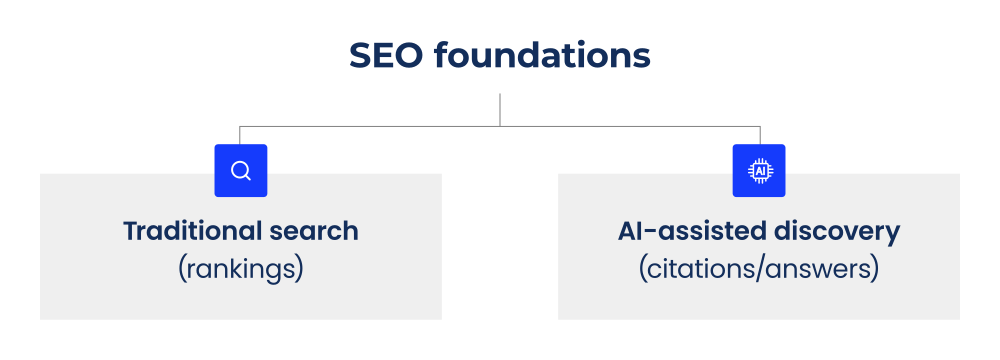
What SEO focuses on
SEO helps search engines crawl, interpret and rank your content. It improves how your pages appear in the search engine results page (SERP) and ensures users can find you when searching for relevant queries.
It typically includes:
- Technical foundations
- Keyword-led content
- Structured data
- Digital PR and link acquisition
- Improving E-E-A-T
- Fixing crawl and indexing issues
As an SEO agency, we see SEO as the technical and content backbone that everything else builds on.
What GEO focuses on
GEO (generative engine optimisation) improves how generative engines, such as ChatGPT and Gemini, understand what your brand does, why it’s credible, and when to reference it inside answers.
This includes:
- Brand mentions from trusted sources
- Strong authority signals (i.e. Digital PR and AiPR)
- Structured data and clarity
- Context wrapping
- Novel insights and original data
- Making content easy for AI models to extract and cite
Where SEO focuses on rankings, GEO is about shaping your brand’s presence inside AI-generated answers.
If you are new to AI search terminology, our GEO glossary breaks down the most common terms and concepts in plain English.
GEO glossary
Where SEO and GEO overlap
Despite their differences, SEO and GEO rely on the same core principles. Both require:
- Structured, trustworthy, high-quality content
- Clean technical foundations
- Clear, consistent information
- Strong authority signals across owned and earned media
- A brand that is easy for both humans and AI to understand
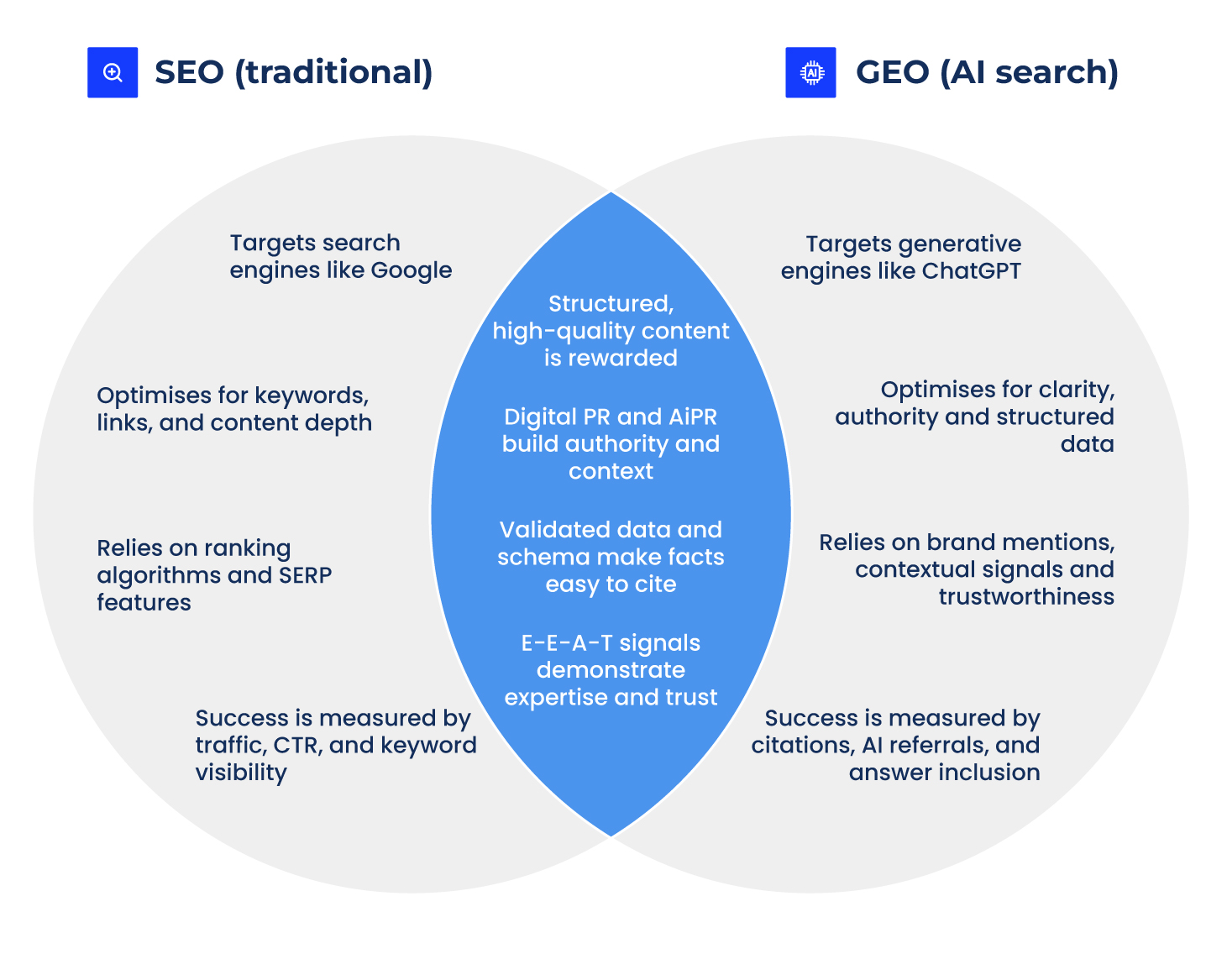
To make the distinction even clearer, below we’ve outlined how SEO and GEO compare side by side in a table.
The key differences between SEO and GEO
| Area | SEO | GEO |
|---|---|---|
| What it targets | Search engines like Google | Generative engines like ChatGPT and Gemini |
| How visibility works | Pages rank for keywords | Brands get referenced in AI answers |
| Primary signals | Keywords, links, crawlability, E-E-A-T | Authority, brand mentions, structured data, context |
| Role of PR | Backlinks support authority | Brand mentions influence citation frequency |
| Technical focus | Indexing, speed, site structure | Structured data, clarity, accessibility for models |
| Success metrics | Rankings, organic traffic, conversions | Citations, AI referrals, answer inclusion |
In short, SEO tells search engines why your content matters, and GEO tells generative engines why your brand matters.
Why GEO must sit inside your search strategy
GEO isn’t a replacement for SEO - it strengthens it.
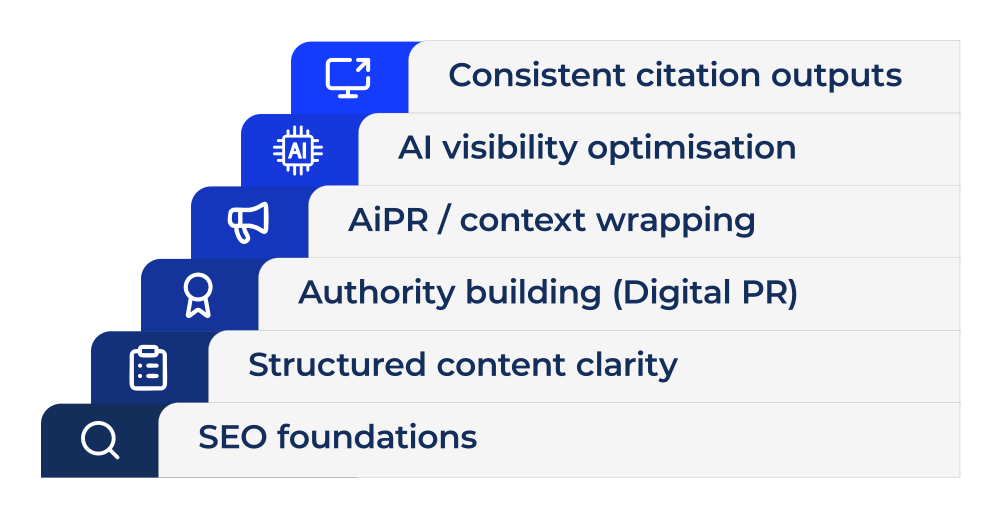
When SEO and GEO are aligned, every action (technical fixes, schema, content updates, PR coverage, new data) feeds into one shared objective - making your brand easy for AI models to understand, trust, and reference.
This creates a unified search strategy across both traditional search and AI-generated results.
Search teams should integrate GEO into existing SEO processes, ensuring that technical SEO, content, Digital PR, and AiPR all work together to improve AI visibility.
For brands new to GEO, our GEO playbook outlines the foundations, frameworks, and tracking methods in detail.
Read our GEO playbook
How search teams can align SEO and GEO
A coherent search strategy brings both disciplines together.
This means ensuring:
- Technical SEO makes your site discoverable to both crawlers and models
- Content is structured, factual and easy for AI to interpret
- Digital PR and AiPR earn brand mentions from trusted sources
- Context wrapping reinforces your key themes
- Novel insights and original data are rewarded by AI models. Our Hyper Relevancy Projects deliver the kind of unique datasets that LLMs consistently cite.
When your SEO and GEO teams work together, every action contributes to the same outcome - making your brand a trusted reference for both search engines and AI engines.
Use our LLM optimisation checklist to review your brand’s foundations yourself.
Get the checklist
Where to start?
Most brands do not know how visible they are to AI models today. Understanding your current position is the first step.
A GEO audit benchmarks your current performance, including:
- Where your brand is already being cited
- Which engines can access and understand your content
- How you compare to competitors
- Opportunities to improve structured data and authority signals
- Gaps in content clarity, consistency or context
Our GEO experts will help you understand your brand’s current position in AI search and identify the actions to improve visibility today and in the long term.
Request a GEO audit
As a multi-award-winning search marketing agency, we bring SEO and GEO together to help brands build visibility across both traditional and AI search.
SEO builds the foundation, and GEO builds your brand’s presence inside AI-generated answers. Together, they create a strategy that positions your brand for the future of search.
Choosing the right GEO support
If you are reviewing external partners, our guide on how to choose a GEO agency outlines the questions to ask, the capabilities to look for, and how to evaluate whether an agency can deliver AI visibility.
Read our GEO experiment which tested if and how AI models crawl LLMs.txt files.
READ THE EXPERIMENT
