


_____ When to invest in global digital PR
Why should brands invest in international digital PR?
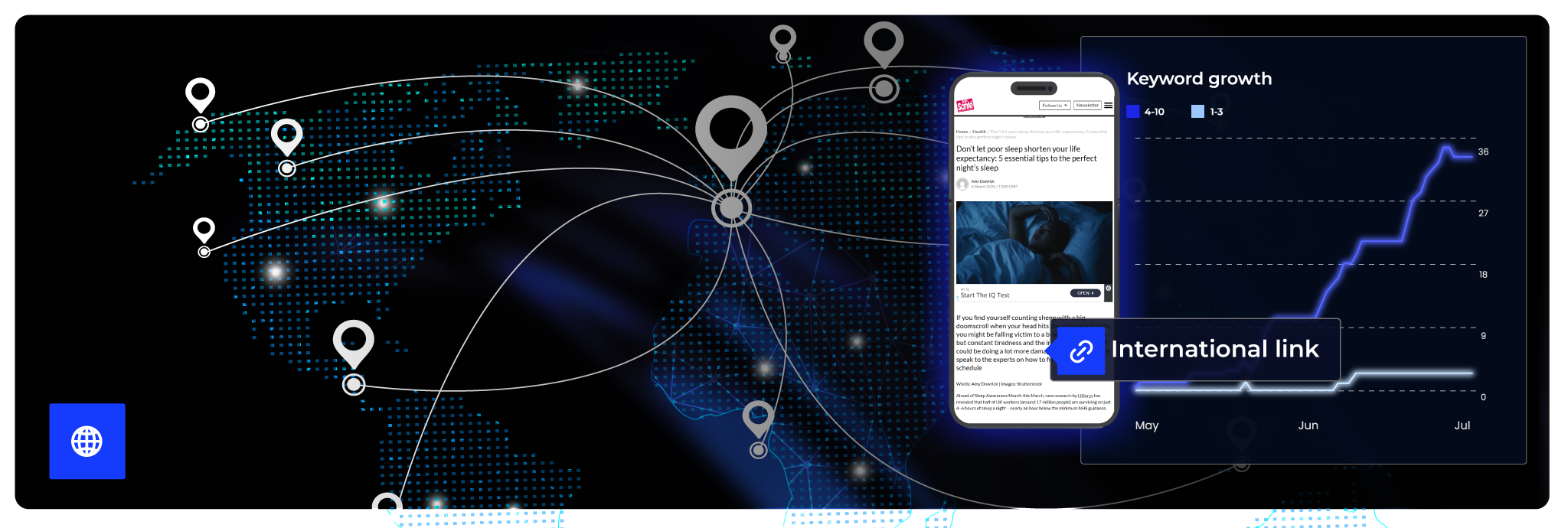
Expanding into a new market can open up a much larger audience for your business, but launching a new website or translating your existing content does not automatically mean people will find you. This is where international digital PR can help.
An experienced global digital PR agency can help you earn authoritative links in the countries where you want to grow, strengthen your organic visibility, and support the commercial pages that move the needle for your business. But what this doesn’t mean is chasing coverage in as many countries as possible - the strategy is far more nuanced than that.
The strongest international digital PR strategies start with a simple question - where does your business want to grow, and what is stopping you from competing there? Let’s break this down further.
What does international digital PR help you achieve?
International digital PR uses PR and link earning to support your visibility in specific countries or regions. That could mean running campaigns for a single priority market, such as Germany, or coordinating activity across several countries as part of a wider international growth strategy. The important part is that the activity reflects the market you are targeting.
Different countries have different competitors, publications, search results and media landscapes. A story that performs well in the UK may have little relevance in France, and vice versa. A brand with strong authority in one country may have a significant gap to close in another.
Therefore, international digital PR needs to consider:
- Where your business sees the greatest growth opportunity
- Which competitors are already winning in that market
- Where the biggest authority gaps exist
- Which pages and products you need to make more visible
- What local journalists and publications are likely to cover
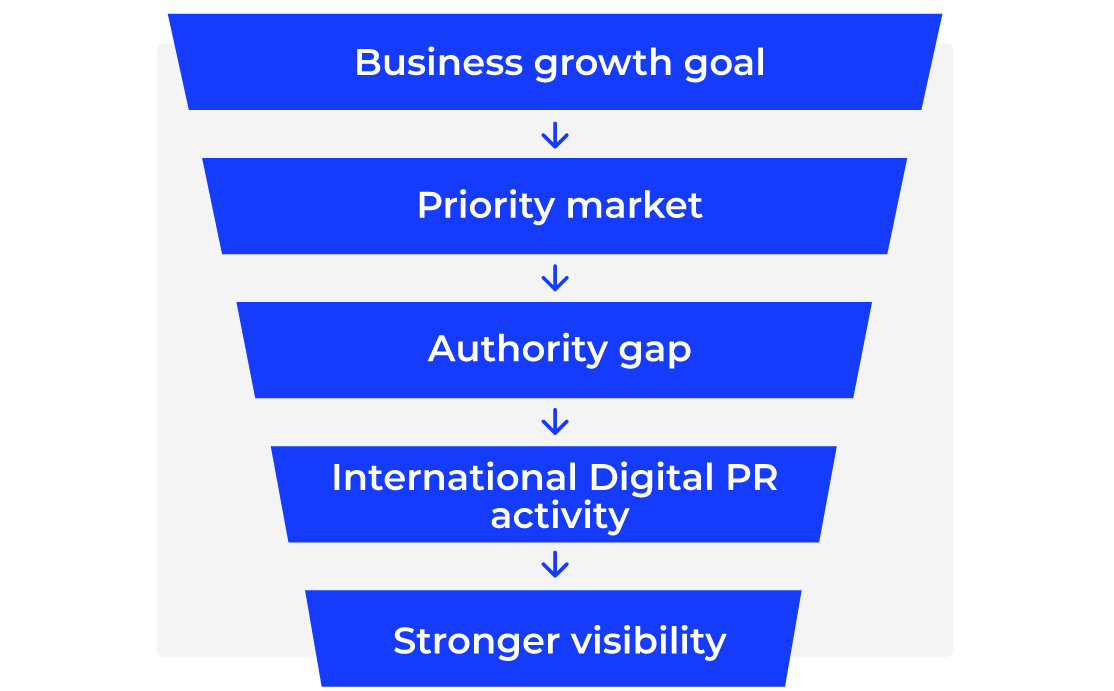
The value of international digital PR becomes clearer when you look at how it supports specific business objectives. When executed successfully, it becomes part of your international search strategy.
 Build authority in priority markets
Being an established brand in one country does not automatically give you the same level of authority everywhere your business operates.
When entering a new market, you may be competing against businesses with years of local coverage and a much stronger backlink profile. Even if your product, website and content are ready for that market, this difference in authority can make it harder to compete in organic search. This is why it's important to earn relevant international links, which can be an important part of supporting growth in new markets.
International growth rarely happens evenly. Some markets may already be performing well, while others struggle to gain visibility. You might see strong commercial potential for a particular product category in France, while your German site continues to be outranked by established local competitors.
As a result, your digital PR investment should reflect those differences. Rather than spreading activity thinly across multiple countries, international digital PR can focus resources on the markets, pages and search opportunities that are key for your business’ growth.
That might mean:
- Building authority around a newly launched market
- Supporting a priority product or service category
- Closing the gap with competitors that have stronger local backlink profiles
- Strengthening sections of the site that are commercially important but struggling to rank
- Increasing link acquisition in a market where your existing profile is heavily underdeveloped
By earning relevant links and coverage from publications in your target market, you can strengthen the authority behind your local website, subfolder or priority pages and close the competitor gap. Essentially, focusing activity where your business needs the most authority.
For a brand expanding into Germany, links from relevant German publications are likely to be a more important part of the strategy than earning another wave of UK coverage. Our guide to digital PR in Germany explores the local media landscape in more detail.
This is why international digital PR should start with the business opportunity and the existing authority gap, as opposed to a hit list of countries where you’d like to see your brand mentioned.
 Compete with established local brands
Entering a new market often means competing with businesses that already have the advantage of being known there - sometimes for decades. They may have stronger relationships with local media, more established search visibility, and years of relevant links pointing to their websites.
If you’re breaking into a new market, you aren’t starting from the same position, and it may take some time for success to follow.
This is particularly important for challenger brands to bear in mind as they enter a competitive category. A technically strong website and well-localised content can only do so much if the businesses already outranking you have significantly more authority supporting their rankings.
International digital PR can help you start making up ground by earning relevant coverage, strengthening priority pages and building the local authority needed to compete.
These results don’t happen overnight, but understanding the gap early means you can invest in closing it rather than assuming the same strategy that worked in your home market will be enough.
 Build trust with new markets and audiences
Visibility is only part of the challenge when entering a new market, as people may find your brand and still have no reason to recognise or trust it. Authority campaigns can help position your brand as a credible source through original research, expert insight and data that journalists actively want to reference.
Media coverage can help build trust by showing that other credible sources are talking about your brand. This is especially important when you’re new to a country or operating in a sector where customers take time to research and compare options before making a decision.
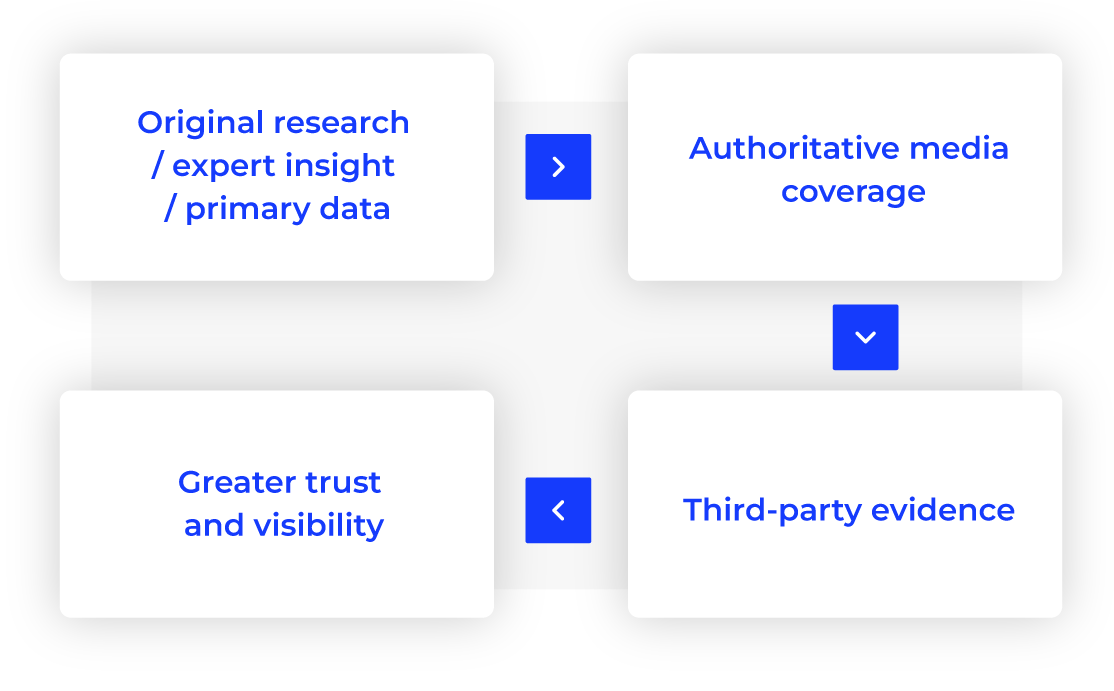
That coverage could stem from:
- Original research covered by respected local publications
- Expert commentary on topics relevant to your industry
- Original data that journalists use as a source
- Coverage that introduces your brand to a new audience
- Repeated mentions alongside the subjects you want your business to be known for
For businesses operating in competitive or regulated sectors, establishing why your business is relevant to that market is particularly important. Customers may be comparing several providers before making a decision, while search engines and AI platforms also draw on third-party sources to understand brands, topics, and entities.
International digital PR can help create more external, third-party evidence around your brand to support authority building.
 Support your wider international expansion strategy
Expanding into a new country is rarely a small investment and often involves significant spend across multiple areas of your business.
For example, you may already be spending money on:
- International SEO
- New country pages or websites
- Translation and localisation
- Local content
- Technical implementation
- Paid media
- Local teams or market specialists
Each of these areas can still struggle to deliver if the brand doesn’t have enough authority behind it. International digital PR can support the work already happening across the wider expansion strategy.
For example, there is little value in investing heavily in a new Spanish section of your website if established competitors continue to outrank it - partly because they have a much stronger local backlink profile.
Digital PR is not a substitute for getting the technical, content and localisation fundamentals right. But once those foundations are in place, it can help give them the authority they need to compete.
This is why international digital PR works best when it is connected to the wider search strategy. The markets being targeted, the pages being promoted, and the links being earned should all point towards the same commercial priorities.
 Plan international activity around real opportunities
Running digital PR campaigns across multiple countries should not mean creating one campaign, translating it and sending it everywhere. Different markets respond to different stories, and the opportunity is rarely the same in each country.
Before we begin any international digital PR activity, we look at the overall business objective - for example, strengthening authority across a set of priority markets - and decide how best to achieve it. This ensures the strategy stays aligned with business goals, while execution is shaped by what will resonate in each individual market.
What this might look like:
- A large data-led campaign in one market
- Locally relevant expert commentary in another
- Reactive PR where there is a clear news opportunity
- Different angles from the same dataset depending on the country
This is often where the strongest international results come from - identifying the opportunities within each market and planning activity accordingly, to boost authority in specific markets, rather than assuming the same campaign will work everywhere.
When should you invest in international digital PR?
International digital PR is most useful when it is solving a clear visibility or authority problem. That could mean entering a new market, strengthening underperforming regions or supporting specific commercial priorities where existing authority is not enough to drive visibility.
Some of the most common reasons to invest include:
 You are entering a new market
Your website and local content may be ready, but you still need to establish authority alongside the brands already competing there. International digital PR can help support the launch by earning relevant links and coverage in that market.
You already operate internationally, but organic performance is weak
Having a local website does not mean you have a strong local search presence. If competitors consistently outrank you, your backlink profile and wider authority may be part of the problem.
Your backlink profile is weaker than local competitors
You may have strong brand recognition globally, but still be competing against businesses with significantly more relevant links in a particular country. An international link audit can help identify where those gaps are largest.
Your digital PR activity is concentrated in one country
If your business operates across several markets but almost all of your links come from just one, your offsite strategy may not reflect your commercial priorities. You don’t need the same amount of coverage in every market, but you do need to understand where additional authority could have the biggest commercial impact.
You want to focus on a specific market or product area
International digital PR doesn’t have to mean running an all-encompassing multi-country campaign at the same time. You can focus on one country, one product category or one clear growth opportunity at a given time. In many cases, this level of focus gives the strategy a much clearer commercial purpose.
Plan your digital PR investment
Use our digital PR calculator to explore packages based on your target market, budget and campaign requirements.
Digital PR calculator
International digital PR examples
At Reboot, our international digital PR strategies are tailored around the specific markets and growth opportunities that are most important to your business - and this starts with understanding where you want to grow. This market-led planning is one of the key areas to assess when choosing an international digital PR agency, alongside its local expertise, data capabilities and reporting.
First, we compare your existing authority with the competitors already performing well in that market. We then look at priority pages and market opportunities before deciding where digital PR can have the biggest impact.
The resulting strategy may include data-led campaigns, localised campaign angles, expert commentary, reactive PR or other link-earning activity depending on the market and objective.
The approach will differ from one market to another because the opportunity is rarely the same, as detailed in our international digital PR playbook.
 Building authority in one priority market
For a German client in the car insurance sector, our work focused on securing authoritative coverage in a highly competitive market. We ran a data-led campaign targeting national and regional outlets, securing 259 pieces of coverage and 236 backlinks.
This is a good example of international digital PR being used with a clear geographic focus - strengthening a brand's authority in the market where it needed to compete.
 Earning links across multiple international markets
A Japanese rail brand wanted to strengthen its SEO foundations and close the competitive gap with other businesses in the rail travel space.
Using a mix of FOI data, social media data, reactive PR and expert commentary, we earned 122 backlinks across markets including Japan, the UK, the US, Germany, Australia and New Zealand - delivering 41% above the contracted KPI.
The activity worked internationally because the campaigns created opportunities across different markets rather than relying on a single story being sent everywhere.
Is international digital PR worth the investment?
International digital PR is worth the investment when it is tied to clear growth opportunities and measurable authority gaps in the markets you want to compete in.
If your business is entering a new market, struggling to compete with established local brands or investing in international SEO without seeing the visibility you expected, authority may be part of the gap. International digital PR can help you close the gaps with competitors by earning relevant links and coverage in the markets where your business wants to grow.
The answer is not to chase coverage in as many countries as possible. The strongest strategies focus on the markets with the greatest commercial opportunity, tie back to wider organic goals and adapt campaigns to the local media landscape.
Brands still deciding where to focus should first assess the search demand, local competition, website readiness and authority gaps in each potential market. Our guide to the questions to ask before entering a new market covers the main areas to review before increasing investment.
Not sure where your biggest international authority gaps are? Request an international link audit to see how your backlink profile compares across your priority markets.