


_____ Choosing a global digital PR agency
How to choose an international digital PR agency
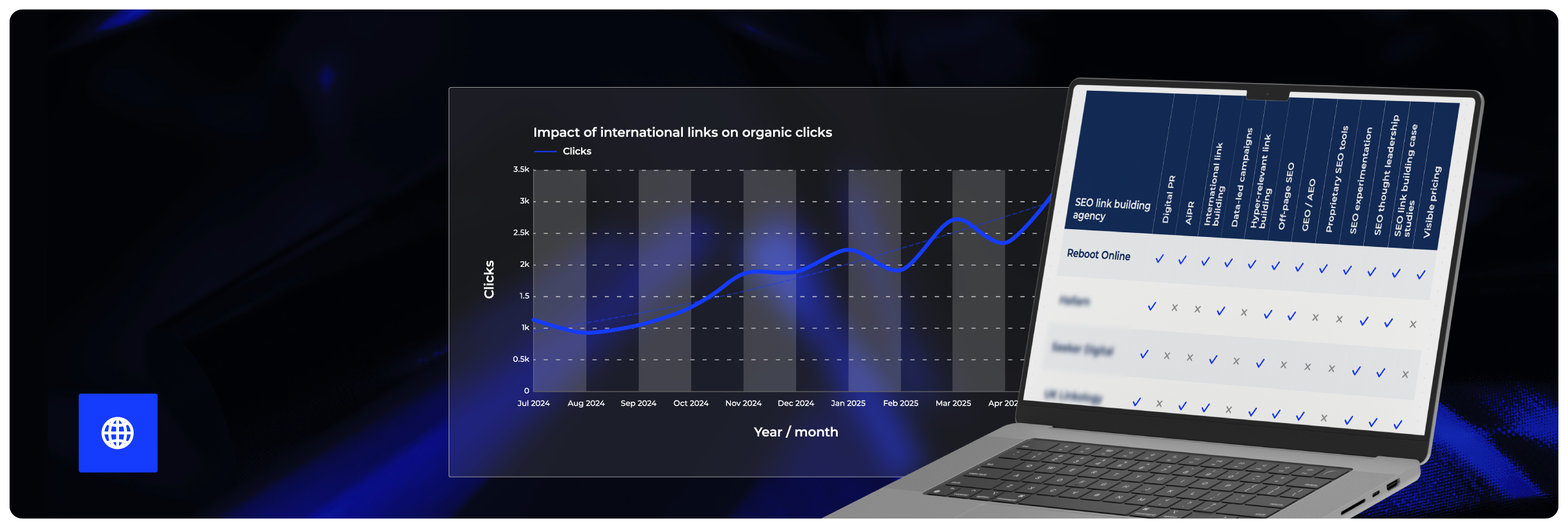
Choosing an international digital PR agency requires more than checking whether an agency can deliver campaigns in several countries or languages.
The right partner should understand how media landscapes, search competition and audience interests differ between your target markets. It should also know how to adapt campaign ideas without losing sight of the wider commercial reason for earning international links.
This guide explains what to look for in an international digital PR agency, which evidence to request and the questions worth asking before appointing one.
What does an international digital PR agency do?
International digital PR helps brands earn relevant online coverage and backlinks across more than one country or region. But this isn't as simple as translating the same campaign into different languages.
Each market has its own publications, journalists' expectations, cultural references and audience interests. A campaign that performs well in the UK may need different data, headlines or outreach approach before it becomes relevant to journalists in Germany, France or the US.
For example, a campaign comparing the most affordable cities for families may work across several countries, but each version would require locally relevant cost data, public services and regional comparisons. The strongest angle may also change depending on the concerns receiving media attention in that market.
The agency should therefore consider local relevance from the start, including:
 The campaign idea: Some topics travel well across borders, while others depend heavily on local culture, regulation or current affairs.
The data: Sources, currencies, definitions and reporting periods may differ between countries, which can make direct comparisons difficult.
The media landscape: National, regional and trade publications will have different priorities and expectations in each market.
The outreach: Pitches should reflect local terminology, journalist preferences and the part of the story most relevant to their audience.
The search opportunity: Campaigns should support the countries, competitors and website pages most important to the wider growth plan.
International digital PR agencies need local knowledge to adapt the work and the wider search expertise to understand where that activity can have the greatest impact.
Our international digital PR playbook explores how digital PR differs across several major markets, including the UK, Germany, France, Spain, the US, Canada and Australia.
Do you need an international agency?
An international agency may be useful when you are entering a new country, building visibility for several regional websites or struggling to earn links outside your home market.
It can also provide additional capacity when your internal team understands the wider business strategy but lacks the local media knowledge, data resources or outreach specialists needed to deliver campaigns across several countries.
Common reasons for appointing an international agency include:
You are entering a new market: An agency can help you understand the local media and search landscape before campaign activity begins, reducing the risk of investing in ideas that have little relevance locally.
Your competitors have stronger local authority: International link analysis can reveal which publications and topics are helping established competitors rank in that market.
Your internal team can’t cover every country: Recruiting PR, data, design and outreach specialists for each target location can be expensive and difficult to scale.
Your campaigns perform unevenly between markets: An international agency should be able to identify whether the issue lies with the concept, data, localisation, outreach or level of local competition.
You need consistency across several regions: A central partner can maintain shared objectives and reporting while adapting the work for each country.
Working with an agency gives you access to a broader mix of specialists without requiring you to recruit every role permanently. We recently worked out the estimated all-in cost of an in-house digital PR team, which worked out at £300,000 and £450,000+ per year.
However, an agency is not always the only or most suitable option.
 Agency, consultant or in-house team?
The best delivery model will depend on the expertise you already have, the amount of work required and how much international activity you plan to run.
An in-house team can offer brand knowledge and direct control over campaigns. However, building that capability across several countries may mean recruiting people with a range of skills, such as knowing different languages, media relations, data analysis, alongside paying for research tools, media databases, design and ongoing training.
Our analysis of the cost of digital PR in-house vs an agency looks more closely at the people and resources needed to run a complete digital PR function.
A consultant may be more suitable when you already have a capable internal team and mainly need strategic advice, training or support with a particular market. An agency will usually offer more delivery capacity across research, campaign production, data analysis and outreach.
We have explored the difference between digital PR agencies and consultants to help businesses understand which type of support may suit them.
A combined arrangement can also work well. Your internal team may own the broader brand and market strategy, while an agency provides specialist research, campaign production or local outreach.
Whatever route you decide on, responsibilities should be clear before delivery starts - including who approves campaign ideas, who handles regional feedback and who is responsible for localisation, outreach and reporting.
How to choose an international digital PR agency
Many agencies describe their services as international, but the meaning behind this varies. Some have permanent teams across several countries, while others coordinate international work from one central location. Some use trusted freelance specialists or partner agencies to provide language and market support.
None of these models should be judged on structure alone. The more important question is whether the agency has the knowledge, people and quality controls needed to deliver consistently in your priority markets.
The following areas will help you assess that.
 Check their target-market experience
Begin by asking where the agency regularly delivers campaigns and how recent that experience is.
A long list of countries on a service page does not prove that the agency understands the markets you are entering. Look for current case studies from those countries and ask for enough detail to understand what was actually delivered.
The agency should be able to explain:
 Which publications covered the work: These should be outlets with an audience and editorial focus relevant to the target country, rather than recognisable publications based elsewhere.
How the campaign performed in each market: A combined international total can hide weak delivery. Ask for the results to be separated by country.
What changed between different markets: Changes to the data, angle, assets or outreach should demonstrate that the campaign was planned for local media.
Which pages the links supported: Where relevant, the agency should explain how the activity connected to local landing pages or wider search goals.
What it learned from the campaign: International results are rarely identical, so useful case studies should explain why some markets performed differently.
You can test this knowledge by asking how the agency would adapt one idea between two of your target countries. A credible answer should go beyond language and discuss factors such as available data, local publication types, terminology, cultural sensitivities, and the topics currently attracting media interest.
A good international partner will consider commercial value, existing visibility, competitor authority, website readiness and likely media opportunity before recommending where to invest. In some cases, building authority in one or two priority markets will provide a better return than spreading the available budget too thinly.
At Reboot, our native market specialists deliver campaigns across Europe, the Americas and other global markets. That practical experience has informed each of our international digital PR guides across the UK, Germany, France, Spain, the US, Canada and Australia - to name a few.
It's better to work with an agency that can explain its strengths and limitations clearly than one that claims to cover every country without showing how.
If you are still comparing potential countries, our guide to the questions to ask before entering a new market covers the search demand, website readiness and authority gaps worth reviewing before deciding where to focus.
Questions to ask
 Look beyond translation
Translation changes the language of a campaign, while localisation changes the campaign so it is relevant to the market. The distinction affects almost every stage of the campaign and its success.
Depending on the country, localisation may involve changing:
The news angle: The subject may remain the same, but the most relevant finding or audience concern could differ.
The data: Local sources, currencies, cities or demographic groups may be needed to make the results meaningful.
The terminology: A direct translation may be technically correct but still sound unnatural or use words that local journalists would not choose.
The supporting assets: Maps, graphics and tables may need new labels, values or regional breakdowns.
The media strategy: National, regional and trade publications will require different versions of the story.
The timing: Public holidays, elections, sporting events and seasonal news cycles may affect when a campaign should launch.
 Example
A campaign comparing the cost of raising a family across different cities in the UK would need to be tailored if delivered in Germany. The agency may need to replace the original sources, account for differences in childcare provision and use German city-level data to make it relevant for journalists and their target audience.
The headline may also need to change if regional inequality or access to public services is more likely to interest German media than the overall cost comparison.
The overall campaign concept is broad enough to stay the same, but the data and story should reflect the questions local journalists and readers are likely to ask.
Ask prospective agencies to show you an example of one campaign delivered in several markets. They should be able to explain what changed, why those decisions were made and how the adaptations affected the results.
A proposal based on creating one press release, translating it and distributing it to several large media lists may increase the volume of outreach, but it doesn’t demonstrate a locally relevant strategy.
 Review their local media knowledge
Successful international outreach relies on understanding how the media landscape works in each target country.
This includes the national news sites, regional publishers, trade titles and specialist publications relevant to your sector, as well as knowing which topics those outlets cover and the evidence journalists expect before considering a story.
A good international digital PR agency should understand:
Where your audience gets its information: The most recognisable global publication is not always the most useful one for your market or sector.
Which journalists cover your topic: Outreach should be based on recent work and relevant editorial roles, rather than broad keyword matches in a database.
Which stories suit different outlets: Regional publications may require local findings, while trade titles are more likely to respond to industry analysis or expert commentary.
How linking practices differ: Some publications routinely include external links, while others are less likely to do so.
How pitches should be presented: Email length, tone, supporting materials and follow-up expectations can vary between markets.
Ask how the agency builds and maintains its media lists. A good answer should include manual research, checks against recent journalist activity and clear reasoning for why each group of publications is relevant.
The agency should also be able to explain its intended media targets before the campaign launches. It may not be able to share journalists’ personal contact details, but it should be able to identify the types of publications and editorial sections it expects to reach.
Relevant outreach is more useful than sending the same pitch to hundreds of loosely connected contacts. Poorly targeted emails can also damage relationships with journalists and make future pitches from the brand easier to ignore.
 Assess their international team
Before appointing an international digital PR agency, you should ask who will be responsible for the work after the pitch has been won.
An agency may present an experienced senior team during the sales process but rely on different people for campaign production, localisation and outreach. This is not necessarily a problem, but the delivery structure should be transparent.
You may want to find out:
 Who will manage the account: You should know who owns the overall strategy, communication and delivery.
Who will develop campaign ideas: Ask whether local market specialists contribute during ideation or only review the copy at the end.
Who will analyse the data: Complex international research should be handled or reviewed by people with suitable analytical experience.
Who will localise the campaign: This should involve more than direct translation and should account for local terminology, context and news values.
Who will contact journalists: Outreach should be completed by people who understand both the language and the media landscape.
How the work will be checked: Data, copy, claims, assets and outreach materials should all pass through a clear quality process.
If any elements are outsourced: Some agencies rely on external support. If this is the case, you should understand how suppliers are selected and managed.
Fluency is important, but the person handling a campaign also needs to understand local news values, journalist expectations and digital PR. A technically accurate translation can still feel unnatural, use unsuitable terminology or overlook the detail that would make the story relevant to local media.
Therefore, it’s worth asking when regional specialists become involved. Their input is often more useful during the early planning stage, when they can shape the data, concept and intended publications, rather than after the central campaign has already been completed.
"Working regularly from Germany gives me a much closer view of the stories journalists are covering, the issues shaping public sentiment and the differences between regions. I can bring that local knowledge into our research and campaign planning from the start, helping us develop angles that feel relevant to German audiences rather than simply adapting a story created for another market."
Janina Arndt
Our native international digital PR experts work closely with our digital PR team and our PhD-level in-house data department, ensuring all campaigns draw on native editorial, analytical, and search expertise.
 Examine their data capabilities
Original data can give journalists a credible reason to cover a campaign, particularly when it reveals differences between countries, regions or industries. It can also strengthen visibility in AI search, as unique, expert-led information gives AI systems a useful source to retrieve and cite when answering relevant questions.
However, comparing several countries introduces additional risks. Governments, regulators and research bodies may use different definitions, reporting periods and collection methods, which means similar-looking figures are not always directly comparable.
Before appointing an agency, ask how it will source, check and explain the data. A reliable methodology should cover things like:
Where each figure comes from: Sources should be clearly named and authoritative enough for journalists to check.
Which reporting periods are being compared: Using figures from different years can distort an international ranking.
How currencies and economic differences are handled: Simple currency conversion may not provide a fair comparison when inflation or income differs.
How missing data is handled: Countries or regions should not be removed simply because they weaken the intended story.
How factors are weighted: If the campaign uses an index, the agency should be able to justify why each factor has been given its weighting.
Whether the sample supports the claim: Survey samples that are sufficient for an overall result may be too small to support conclusions about individual markets.
Which limitations apply: A transparent methodology should acknowledge where comparisons are imperfect.
Ask to see the methodology behind previous campaigns so you can review campaigns beyond the logos of publications that have covered the story.
Any methodology should be clear enough for a journalist to understand and, where necessary, rehash it. If it’s not, there may be issues with how data is collected. For example, basing rankings on unexplained weightings or making claims that go beyond what the underlying dataset can back up.
These risks become particularly important in regulated sectors like finance, healthcare and insurance, where inaccurate or overstated findings can create compliance and reputational problems.
Reboot has the largest in-house data team of any UK agency, with specialists supporting international campaigns through original datasets, modelling, analysis, Freedom of Information requests and data visualisation.
Because the work remains in-house, our data and digital PR teams can assess whether an idea is viable before committing substantial time and budget and refine the methodology together when the intended media angle changes during production.
 Check their SEO understanding
digital PR should support the wider search strategy as opposed to operating in silo.
An international campaign can earn links from well-known publications without strengthening the pages or markets that are commercially important to the business. The agency should therefore understand where authority is lacking, which local competitors are strongest and which parts of the website need support.
Consider asking how the agency will:
Assess your starting position: This should include current authority, rankings, backlink profiles and non-brand visibility in each market.
Identify priority countries: Investment should reflect commercial opportunity and the level of work required to compete.
Choose target pages: Campaigns should not automatically point every link to the homepage when local product, category or service pages need authority.
Evaluate relevance: The agency should look beyond domain authority and consider the publication’s country, subject, audience and relationship to the linked page.
Work with your SEO and content teams: digital PR activity should align with technical requirements, planned content and wider international growth.
Measure organic impact: Reporting should consider whether visibility, rankings or traffic changed after the links were earned.
A relevant international backlink might come from a publication based in the target country, cover a subject connected to your sector and point to the correct local version of the website. The article should also make the relationship between the brand and story clear - something we do alongside ‘context wrapping’ to help coverage go further.
This connection between digital PR and wider organic performance is central to how we work at Reboot. Our international campaigns draw on SEO, content and data expertise, with decisions based on search opportunity rather than coverage alone.
This wider expertise helped us win multiple prestigious awards, including ‘Best Global Large SEO Agency’ at the 2025 Global Search Awards and ‘Best Large SEO Agency’ at the 2026 European Search Awards.
Awards should not be the sole reason for selecting an agency, but they can provide independent, external validation for their campaign results, agency processes and technical expertise.
 Ask how success will be measured
Agreeing on what success looks like before delivery starts will make international performance easier to assess. The most useful measures will depend on the purpose of the activity, which usually ties back to overarching business outcomes.
A brand entering a new country may initially focus on building relevant local authority and securing coverage from recognised publications. A more established international business may prioritise closing a competitor link gap, improving commercial rankings or increasing visibility for local product pages.
Possible measures include:
Links earned: Link volume can show delivery, but the total should be assessed alongside quality and relevance.
Market-level performance: Results should be separated by country rather than combined into one international figure.
Coverage in priority publications: This helps show whether the campaign reached the outlets identified during planning.
Links to priority pages: Reporting should explain whether commercial or market-specific pages received support.
Relevance and authority: The agency should assess how closely each publication and article relates to the brand, sector and linked page.
Organic visibility: Rankings, traffic and share of voice can help show whether authority gains are translating into stronger search performance.
Brand visibility: Relevant mentions and citations may support awareness even when a publication does not include a link.
Commercial performance: Leads, conversions and revenue should be included where reliable attribution is possible.
Before appointing an international digital PR agency, ask to see an example report to see how they lay it out and whether it works for you.
Some agencies opt for combined reporting, making an international campaign look stronger than it is. For example, an agency may report 60 links across Germany, France and Spain, but 50 of those links came from Spain. As a result, reporting by country should be a given and include performance against the original target, the types of publications secured and an explanation of why results differed.
A useful report should also recommend what happens next. If one market consistently outperforms the others, the agency should consider why this may be the case, and help to determine whether future budget should be allocated differently.
Reboot agrees minimum link delivery targets with digital PR clients and reports against the wider search outcomes relevant to each account. Across our work, we have earned more than 48,000 backlinks for clients in international and highly competitive sectors.
That level of delivery demonstrates experience at scale, but the result for an individual client should still be judged against its specific markets, objectives and starting position.
Planning digital PR in a new market?
Enter your target domain, preferred market and budget into our digital PR calculator to see a recommended link target and delivery window for your campaign.
Calculate your digital PR package
Consider how they work with your team
International campaigns often involve more stakeholders, approval stages and deadlines than a standard UK digital PR agency.
An agency may need to coordinate with a central marketing team, local brand managers, SEO specialists, legal departments and external partners. Bearing this in mind, the working relationship should be assessed as carefully as the campaign ideas.
Before appointing an agency, ask:
Who will be your main contact: There should be a clear owner for communication and delivery.
How ideas will be approved: The process should account for central and regional feedback without allowing conflicting comments to stall the work.
How often you will receive updates: Agree which information will be shared and when.
How delays will be handled: The agency should communicate risks early and explain their effect on the launch.
How regional stakeholders will contribute: Local teams may have useful market knowledge, but their responsibilities and deadlines should be clear.
What happens when a campaign underperforms: You should expect honest analysis and a plan for applying the lessons.
How decisions will be documented: Clear records reduce confusion when several teams are involved.
As much as you take the time to understand the agency, the agency should take time to understand your business before presenting campaign ideas. For example, they should be aware of your commercial objectives, priority products, audience, tone of voice, legal restrictions, prior PR activity, and reasons for expanding into the markets. If the agency can’t access this information easily, it should be asking about it.
Our guide to the traits of a good digital PR agency covers the broader qualities worth considering, including communication, teamwork and a willingness to understand the client.
A productive working relationship doesn’t require the agency to agree with every request. You are appointing specialists for their judgement, so they should be willing to challenge an idea when the available data, media landscape or search opportunity does not support it.
The important point is that the agency can explain that recommendation clearly and suggest a stronger alternative.
 Questions to ask an international agency
An agency pitch should give you enough information to understand how the team thinks, not only what it has delivered in the past.
The agency’s answers should reflect your website, markets and business objectives. A generic international plan presented before the team has examined those areas is unlikely to reveal much about how it would handle the work.
The following questions can help you explore its experience, delivery model and suitability for your business.
Market experience
- Which countries do you work in regularly?
- What recent results have you achieved in our priority markets?
- Have you worked in our sector or a similarly regulated industry?
- How would your recommendations differ between our target countries?
- Which markets would you prioritise first and why?
- Which publications would be most relevant to our audience?
- Can you show how a previous campaign was changed between markets?
People and delivery
- Who will work on our account after the pitch?
- Who will complete the outreach in each country?
- When will regional specialists become involved?
- Which parts of the service are outsourced?
- How is localised work reviewed?
- Who is responsible for checking the data?
- How will our internal and regional teams contribute?
Campaign planning
- How will you assess whether an idea can work internationally?
- How will you adapt campaigns for each country?
- Will the data and assets change between markets?
- How will local events and news cycles affect the plan?
- How will activity support our priority products or landing pages?
- How do you decide whether one campaign should cover several countries?
- What would cause you to advise against targeting a market?
Reporting and measurement
- Which KPIs would you recommend for our objectives?
- Will results be separated by country?
- How do you assess link relevance?
- Can you show us an example report?
- How will you connect digital PR activity to organic performance?
- What happens if one market delivers fewer links than expected?
- How will campaign results influence future planning?
Commercial fit
- What is included within the fee?
- Are data, design, translation and localisation included?
- What input will you need from our team?
- Can additional markets be introduced later?
- How will budgets be divided between countries?
- What are the minimum contract and notice periods?
- Are delivery targets included within the agreement?
Choosing the right international partner
International digital PR works best when local media knowledge is combined with a clear understanding of search.
At Reboot, our international digital PR specialists work alongside SEO, content, GEO and one of the largest in-house data teams of any UK search agency. This means campaigns are planned around more than coverage alone. We look at the markets where your brand has the strongest commercial opportunity, the authority gaps holding you back and the pages that need support.
Our international work has earned coverage and links across Europe, the Americas and other global markets, helping clients build local authority, improve organic visibility and compete with established brands in new countries.
That expertise has also been recognised internationally. Reboot won Best Global Large SEO Agency at the 2025 Global Search Awards and Best Large SEO Agency at the 2026 European Search Awards, alongside awards for campaigns delivered in specific sectors and overseas markets.
Our international digital PR service includes:
Market-led campaign planning: We assess local competitors, media opportunities and search visibility before deciding where activity should focus.
Localised campaign delivery: Stories, data, assets and outreach are adapted for each country rather than translated from one central version.
In-house data support: Our data specialists create and review original research, international datasets, surveys and methodologies.
Search-led link building: Campaigns are connected to priority markets, target pages and wider organic growth goals.
Clear delivery targets: We agree minimum link KPIs and report on performance by market, giving you a transparent view of what has been achieved.
One connected international team: SEO, digital PR, content, data and GEO specialists work together, reducing the need to manage several disconnected suppliers.
Whether you are entering your first overseas market or need to improve results across an established international website, we can help you identify where digital PR activity will have the strongest effect.
Speak to our international digital PR team about your priority markets and growth plans.
Get in touch