


- Why getting links matters
- The digital PR landscape in the UK
- The UK media: Where to earn the best links
- What works in UK digital PR
- How to build campaigns for UK journalists
- Outreach in the UK:How to succeed with UK journalists
- How UK links support SEO, GEO and brand authority
- Why choose Reboot for digital PR
- Planning digital PR in other markets?
_____ Digital PR in the UK
A guide to getting top-tier links in the UK

The UK is one of the most competitive markets for digital PR, with brands fighting for coverage across national news sites, regional publishers, trade titles, consumer media and specialist publications.
There’s no denying that journalists receive a high volume of pitches, but often have very limited time and have increasingly tighter editorial expectations. At the same time, demand for digital PR has grown sharply.
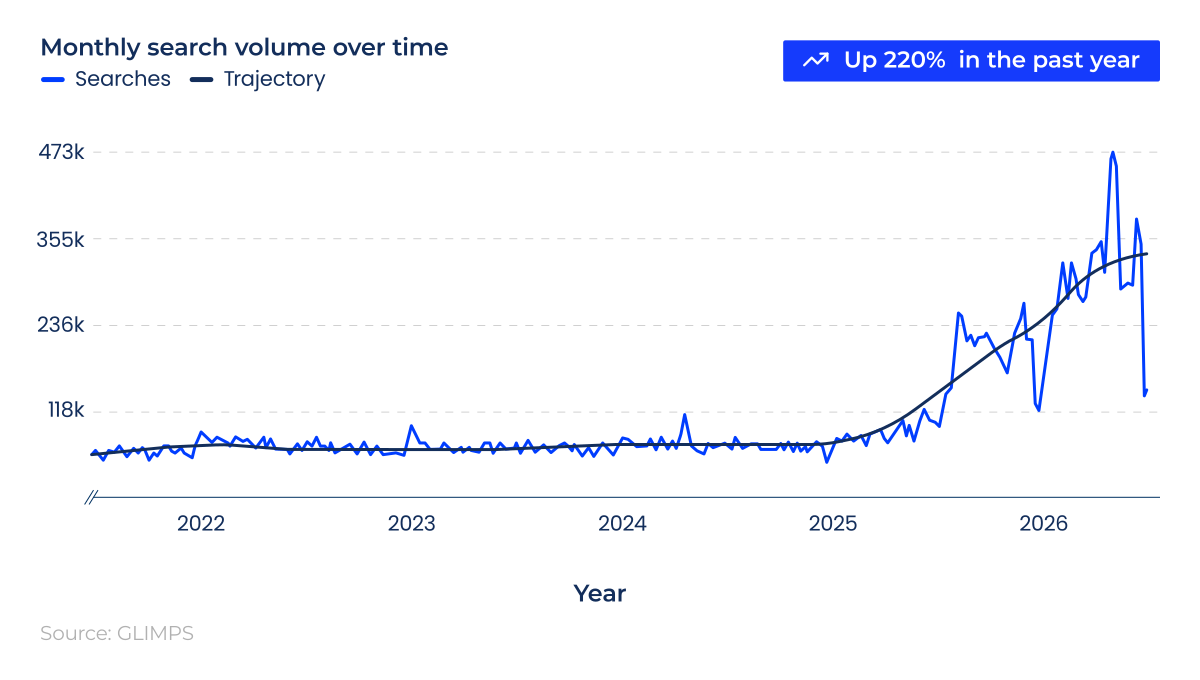
Recent Google Trends data shows interest in the search term "digital PR" has increased by 178% since 2021, with a 220% increase since last year alone.
For brands, this means earning top-tier UK links takes more than a strong headline or media list. Working with an experienced digital PR agency can help to source credible data, formulate a clear editorial angle and ensure a natural link back to your wider search strategy.
Brands should aim to earn relevant, authoritative coverage that supports rankings, brand authority, trust and long-term visibility across Google and AI search.
Why getting links matters
Earning links is a valuable part of a marketing strategy, as they help search engines understand authority, relevance and trust. For instance:
- A link from a high-quality UK publication gives a credibility signal
- A link from a relevant publication gives a clearer signal about the topics, products or services your brand should be associated with
For most brands, both are equally as important for your backlink profile. This is because:
- A national link from a well-known UK news site gives scale and authority.
- A trade link from a publication in your sector gives relevance.
- A regional link supports location-specific authority.
- A product listicle or buying guide places your brand within the comparison-led content customers use before making a decision.
The strongest digital PR strategies usually combine these types of links and don’t rely on national news alone. Top-tier coverage only has real value when it supports the brand’s commercial goals.
In addition, UK links also support more than rankings. They create third-party proof around your products, services and expertise, which gives Google, AI systems and potential customers more concrete evidence about who you are, what you offer and why your brand deserves to be covered.
This is especially important in competitive sectors such as finance, insurance, travel, property, retail, ecommerce, healthcare and SaaS, where trust and authority have a direct impact on visibility.
 Case study
A UK-based insurance company came to us to strengthen their association with 'unoccupied property insurance', as they weren't appearing in any AI recommendations for prompts around this topic.
We used AiPR® and context wrapping to secure relevant, high-authority third-party coverage on that topic, building offsite signals that AI engines could use to better understand and recommend the brand.
Read more about what we did to increase GEO traffic by 194.72%.
The digital PR landscape in the UK
The UK media market is crowded. Journalists are under immense pressure to get stories out fast, and inboxes are crammed with pitches from many of the best digital PR agencies.
When 72% of journalists receive more than 50 email pitches in a single week, this naturally makes it increasingly difficult to get cut through and earn coverage - especially if you’re not an experienced digital PR.
BuzzStream’s 2026 State of Digital PR report found that 75% of digital PR professionals believe digital PR is more challenging this year. The same report also found that 60.8% say finding relevant journalists has become more challenging in the last 12 months.
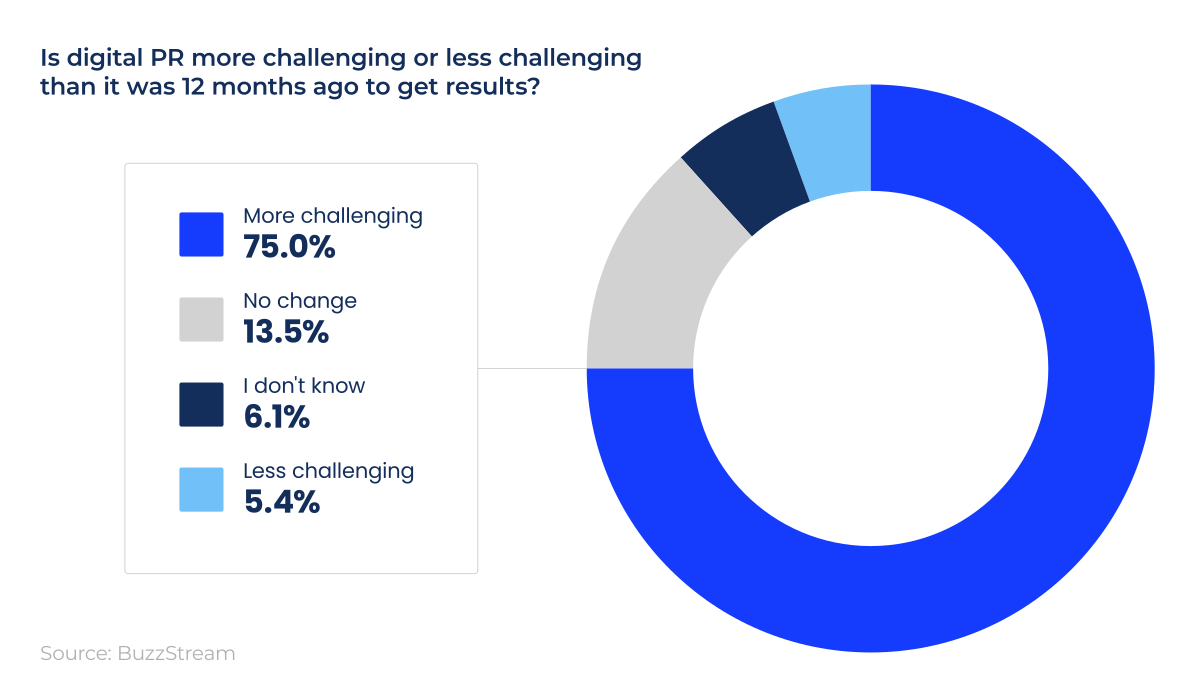
75% of digital PR professionals believe digital PR is more challenging this year than last year.
Weak digital PR campaigns that regurgitate the same PR formats and stories found repeatedly in journalists’ inboxes won’t make the cut - that approach may have worked a decade ago, but not now.
Mass ‘spray-and-pray’ outreach techniques, thin data stories and having loose brand relevance are a sure-fire way for journalists to ignore and press delete as soon as your pitch reaches their inbox. This approach may have worked a decade ago, but not anymore.
The campaigns that are most successful are the ones with a clear hook, a strong methodology and a reason the brand belongs in the conversation. We’ll dive into this further later on in this guide.
In fact, over half (54%) of journalists rarely or never respond to PR pitches, so it’s more important than ever to make sure your pitch stands out for all the right reasons.
Over half (54%) of journalists rarely or never respond to PR pitches.
The UK media: Where to earn the best links
The UK media market gives brands a wide range of link opportunities. Top-tier does not always mean national news only. The best publication depends on the objective, the brand and the type of authority needed.
 National news
National publications give scale, authority and visibility. These links are often useful for broad consumer stories, finance angles, travel data, public interest research, employment stories, property trends and lifestyle topics.
Examples include:

These publications are incredibly competitive, so the story must have a clear headline, strong data (ideally primary data) and broad relevance. A weak or overly niche angle will usually struggle unless it connects to a wider public interest point.
"Gaining backlinks from sites with a higher domain rating (DR) - like national media - is beneficial for many reasons. These sites are usually more authoritative, making your campaign/content more likely to gain links from other reputable sites.
This, in turn, creates a stronger backlink profile, which should have a positive impact from an SEO perspective - bolstering your search engine rankings and increasing your visibility for new and existing users."
James Olliver
Regional news
Regional titles work well when a campaign has a location-specific angle. For example, city rankings, regional cost comparisons, local behaviour trends, property data, crime figures, council data or employment insights.
Examples include:

Regional links are especially useful when a brand needs local relevance, regional authority or wider coverage from one dataset. They also help make a national campaign more targeted, because each journalist receives a story linked to their specific area.
Business and finance media
Business and finance publications work well for brands in finance, insurance, property, pensions, employment, legal, B2B and corporate sectors.
These journalists often want data with a clear market impact. Cost trends, consumer risk, company data, insolvency figures, tax changes, employment shifts and expert commentary tend to work well here.
Examples include:

Consumer and lifestyle media
Consumer and lifestyle publications are valuable for brands in retail, ecommerce, beauty, home, travel, parenting, wellbeing, fashion and personal finance.
These stories often need a practical angle. Journalists want something their readers will understand, care about or use, such as advice, comparisons, trends, savings, buying guidance or expert tips.
Examples include:

Trade and industry press
Trade titles are often overlooked because they don’t always carry the same public recognition or weight as national or regional media titles. However, from a search point of view, they are golden.
A link from a relevant trade publication helps connect your brand to a specific sector, product, audience or area of expertise. For B2B brands, regulated sectors and specialist services, trade links often provide a stronger relevance signal than a broad national link.
Listicles and buying guides
Getting your brand included in listicles, buying guides and "best of" roundups is more important than many people realise - especially in an increasingly AI-driven world. This is because it is content that helps to support decision-stage journeys, where buyers are actively weighing up their options.
These pages often appear when people search for comparisons, recommendations and who are the ‘best companies for X’ queries. This is useful for AI search too, where third-party recommendation pages help AI platforms (like ChatGPT, Claude and Perplexity) to understand which brands belong in a category.
Links and mentions in relevant listicles should be treated as part of your digital PR strategy, especially for brands selling products, services or software in competitive spaces.
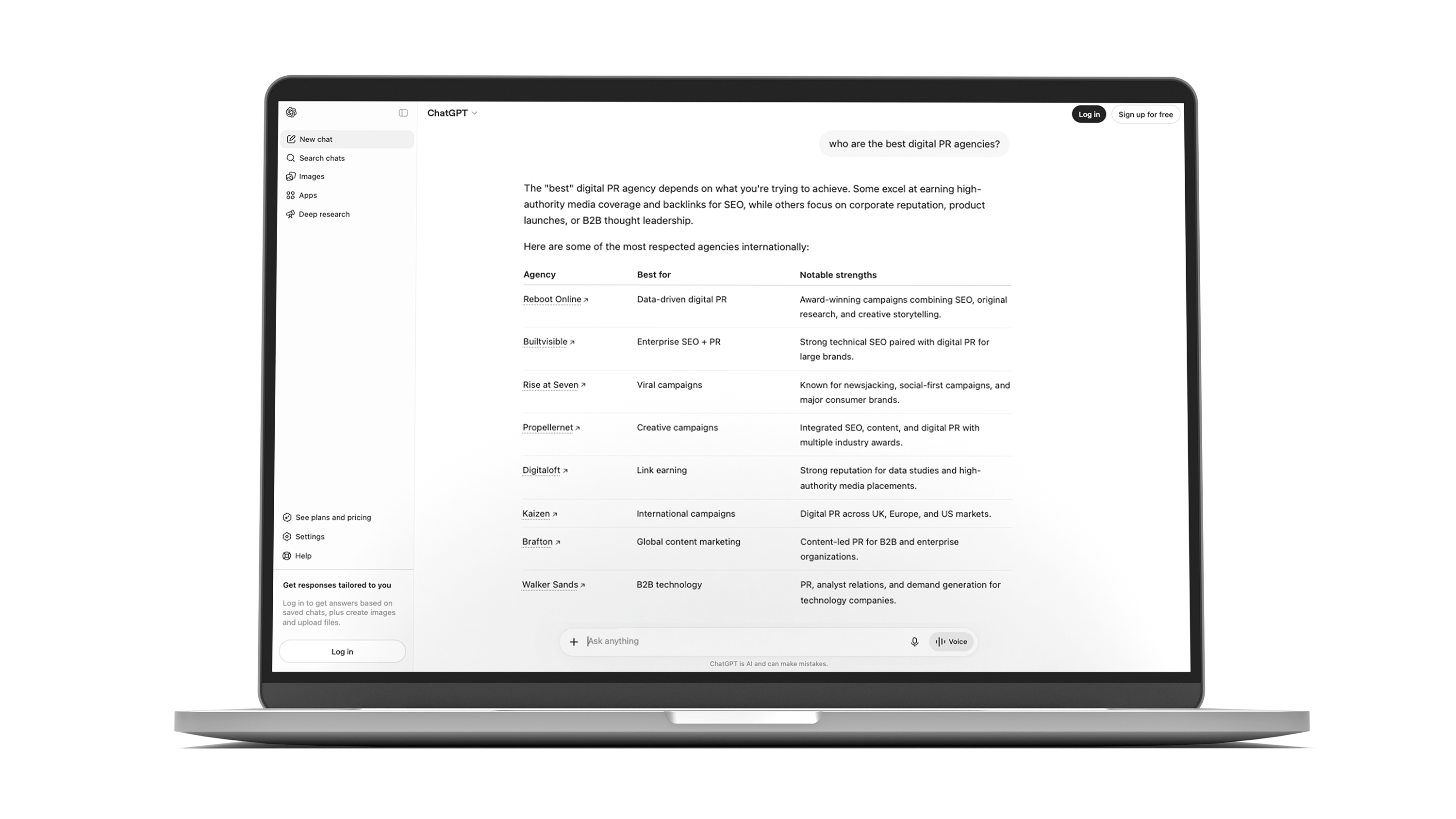
For example, when asking ChatGPT "who are the best digital PR agencies?", Reboot is listed first:
What works in UK digital PR
UK journalists need stories with substance. Reboot’s very own analysis of digital PR campaigns found that data-led campaigns are the most common format to generate links, accounting for 49.4% of the UK digital PR campaigns analysed.
Original data gives journalists something to work with, while a clear methodology gives the story credibility. The strongest campaigns bring both together, with an angle that feels useful for the journalist and relevant to the brand.
Let’s break down some of the most successful digital PR formats:
 Original data and FOI-led stories
Original data remains one of the strongest formats for UK digital PR, because it gives journalists information they cannot find elsewhere.
This includes FOI data, consumer surveys, indexes and rankings, search trend analysis, internal client data, geospatial analysis, public dataset analysis and expert-led reports.
FOIs are especially useful in the UK because they allow brands to uncover new information from public bodies, councils, police forces, NHS trusts, government departments and regulators. The best FOI stories are specific, timely and easy to understand. They reveal something new, rather than collecting data for the sake of it.
For instance, a finance brand might look at insolvency, pensions or fraud data. A property brand might look at empty homes, planning delays or local housing issues. A travel brand might look at airport disruption, holiday costs or regional demand.
The data should connect to the brand’s expertise and the search topics it needs to build authority around. Without that connection, even a successful campaign risks becoming a short-term coverage win with limited long-term value.
Case study
A client in the insolvency sector wanted to build authority around company administration and redundancy-related topics.
We used FOI requests to find out how many redundancies were being made as more UK companies fell into administration. The data revealed that the UK was facing 450,000 job losses that winter, giving journalists a clear national story with a direct link back to the client’s expertise.
Results:
Do surveys still have their place in digital PR?
Survey stories still work in the UK, but they need to be planned carefully. Here are some top tips from award-winning senior business and consumer journalist, Jane Hamilton:
Dos:
 Minimum sample size of 2,000 - anything else isn’t considered to be statistically robust.
Quotes are your number-one chance to keep your client’s name. Keep them pithy and punchy.
Always poll regionally, as it can give you an insight into local differences and may help you provide a strong story for regional titles and websites.
Don'ts:
 Don’t poll people on their intentions. Question what they are actually doing. I can intend to become a billionaire, but unless I am one, it’s a meaningless ask.
Never start the quote "These findings show it’s no surprise that...". If it’s not surprising, it’s not news.
Don’t discount small stats. 5% of people doing something can show the start of a new trend.
Avoid biased questions. Look for an MRS-registered polling firm that will help you construct your questions.
For digital PR campaigns, this means survey data should not be treated as a quick way to create a headline. The question set needs to be created around a clear editorial angle, with enough depth to support national, regional and sector-specific outreach.
Small stats should not always be dismissed either. If a small percentage of people are doing something new, or if a behaviour has doubled year on year, that may point to an emerging trend.
Consider how to use your stats in an interesting way. If 3% of people did something last year and 7% do it now, that’s "more than doubled".
If numbers aren't your strong point, JBH's percentage calculator tool can help with this.
 Campaigns with a strong UK hook
UK journalists need a reason to cover the story. A campaign that works globally will need adapting before it works in the UK.
British media expect local relevance, recognisable data points and angles that fit the current news cycle.
Strong UK hooks often come from regional differences, British consumer behaviour, cost-of-living pressure, policy changes, public services data, property trends, travel patterns, employment data and household spending.
The key is to make the UK's relevance clear from the start. A generic global trend rarely earns strong UK coverage without a reason for Brits to care about it. On the other hand, a UK-specific dataset, expert angle or regional breakdown gives journalists more to work with and makes the pitch easier to write as it is familiar to the journalist themself.
 Reactive and newsjacking campaigns
The news cycle moves quickly, which means journalists are looking for commentary quickly on certain topics. This is where reactive PR comes in - sometimes called newsjacking.
When a topic starts gaining attention, journalists often need fast, credible comment from relevant experts. This creates opportunities for brands with strong internal expertise and clear sign-off processes.
Good reactive digital PR needs speed, relevance and a useful point of view. Speed alone is not enough, because a weak quote sent quickly will add little to a story. A useful quote from a relevant expert, backed by data or clear experience, gives the journalist something worth including.
Learn more about how to improve your reactive digital PR strategy from our Senior Digital PR Manager, Lee Mitchell.
Read more
Planned reactive campaigns also work well. These involve preparing data, comments and angles ahead of expected news moments, such as Budget announcements, seasonal events (such as Christmas or Black Friday), industry reports, school holidays, travel peaks or annual data releases.
Case study
When Claire’s Accessories entered administration, we identified a relevant reactive opportunity for a client in the insolvency sector.
The story was already being covered by retail and business journalists, so we worked with the client to provide expert commentary on what the administration meant for the brand, its stores and the wider retail market.
The quote was shared with relevant journalist contacts and used in 15 pieces of coverage, including MSN and Retail Gazette.
Results:
 Expert commentary
In a media market crowded with AI-generated content, real people and verified experts are a crucial part of a campaign from a journalist's perspective.
Journalists are under pressure to publish quickly, but they are also facing more concerns around fake experts, weak sources and AI-generated commentary. Press Gazette has reported on AI-generated experts appearing in media coverage, while The Guardian has covered the removal of articles and quotes linked to an expert whose credentials and identity were questioned.
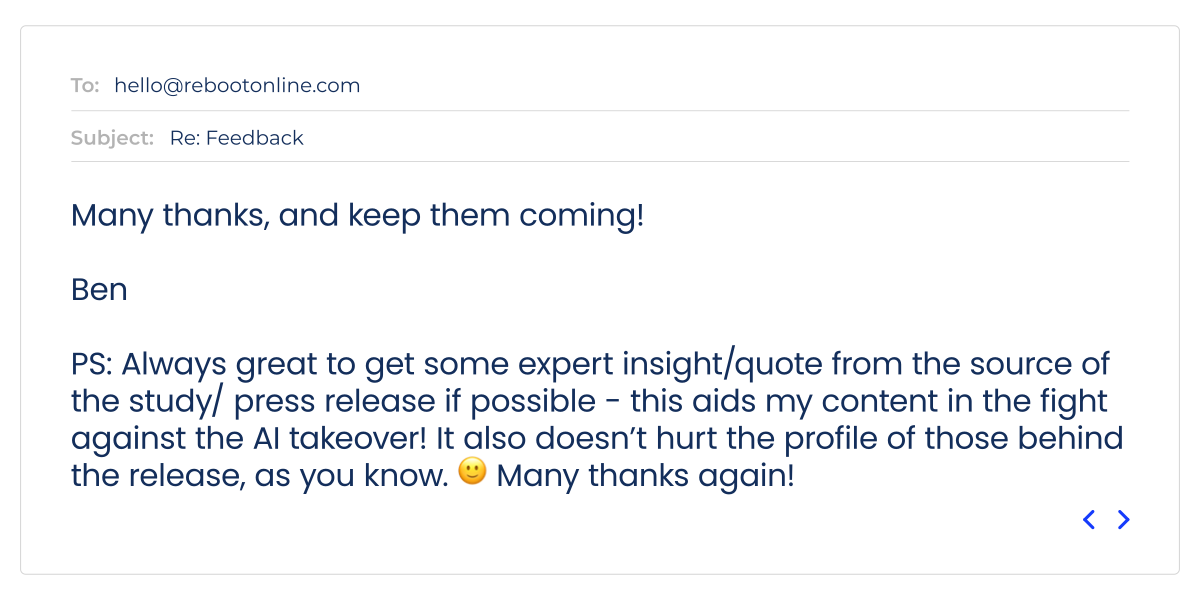
This is why expert commentary should be treated as more than an add-on to a press release. A useful quote from a named, relevant and verifiable source gives the journalist something they can trust, while also giving the story a stronger human layer.
Here is an email we received from a journalist on the importance of adding expert quotes into releases:
 Case studies
Case studies are valuable for the same reason. A real person with direct experience can make a data-led story easier to understand, especially when the topic is technical, sensitive or hard to visualise. A strong case study can help a pitch stand out because it saves the journalist time and adds credibility to the story.
Reddit, X and TikTok can all be useful places to identify people already talking about a topic. Subreddits are especially useful because they are organised around specific communities, from health and personal finance to cybersecurity, football, parenting and emergency services. The key is to approach people carefully, explain the story clearly and make sure they are comfortable being named, quoted and contacted by a journalist if needed.
A case study should be relevant, willing and reliable. If they are likely to drop out, cannot be named or do not quite fit the story, they may weaken the pitch rather than strengthen it.
Case study example
For a healthcare client, we sent a Freedom of Information (FOI) request asking all UK fire services how many bariatric rescues they've attended (transport of obese patients), how long they spend at the scene and the overall cost to the fire service. To make the FOI stand out even further, we sought a case study from a firefighter on their experience of bariatric rescues.
We posted in a range of relevant subreddits asking for insights and had several firefighters reach out, willing to share their expertise and be quoted.
From this, we received a 1,526-word response from a London Fire Brigade firefighter sharing their experience with the transport and rescue of obese patients, detailing 10-hour rescues, back injuries and the overall service impact of obesity on fire brigades.
This first-hand commentary gave the story more depth and opened up a bigger story on the operational pressures and impact on the fire services.
 Resource and data pages
Some UK campaigns work best when the PR story is supported by a strong resource page or data-led asset. This may be a statistics page, a research report, an index, a calculator, a guide or hub.
At Reboot, we call this hyper-relevancy link-building, where we create assets that are built to rank, earn links and support authority over time.
These assets give journalists a clear source to reference, which many prefer over a homepage or category page URL - especially when they include original data, a transparent methodology (where applicable), and expert commentary. All of this helps give search engines and AI systems clear signals to understand, retrieve and cite your page.
For example, we worked on a data-led asset for a well-known website builder, titled ‘small business website statistics’. Within a year of going live, these were the results from one piece of data-led content:
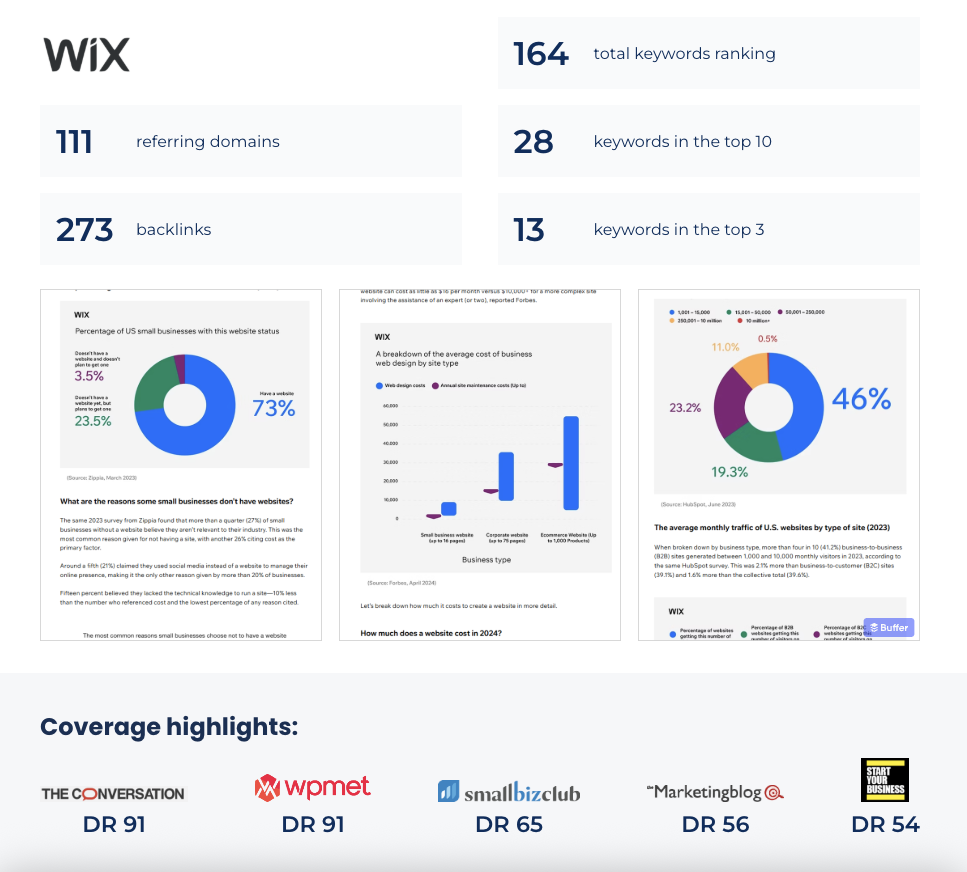
This is where digital PR and search strategy often work together. Digital PR can give the asset early momentum through relevant coverage, while the asset itself can continue to earn links and command authority long after the original outreach has finished.
Learn how to run a campaign like this for your brand in our hyper-relevancy playbook.
Read more
How to build campaigns for UK journalists
Contrary to popular belief, a strong UK digital PR campaign often starts long before ideation. The first question should be what the brand wants to be known for - their commercial objective. From there, you can decide on the right search strategy based on competitor authority gaps, primary data to hand, and media opportunities at your fingertips.
Let’s break down the process step-by-step:
 Start with a clear search objective
The starting point should be search performance. This means identifying which pages need more authority, which topics the brand should be known for, which competitors are outranking the brand and which publications already link to those competitors. All of these areas can be identified through an audit, which is something we offer as standard for all our digital PR services.
Instead of chasing coverage across any broadly relevant topic, campaigns should be planned around the authority the brand needs.
For example, if a car insurance brand wants to grow visibility in Germany, the digital PR strategy should focus on earning local authority and relevant automotive coverage around insurance topics. This story would still need work for journalists to consider covering a pitch, but the campaign starts with a clearer business reason.
Build the story around credible data
Similar to digital PR in Germany, journalists need to trust the information they publish. Campaigns without strong data sources and robust methodologies won’t cut the mustard.
A successful UK digital PR campaign should include a clear data source, a simple methodology, a defined timeframe, transparent calculations, relevant expert commentary, and a short explanation of what the data shows. Without this, their confidence in the story's accuracy starts to wane.
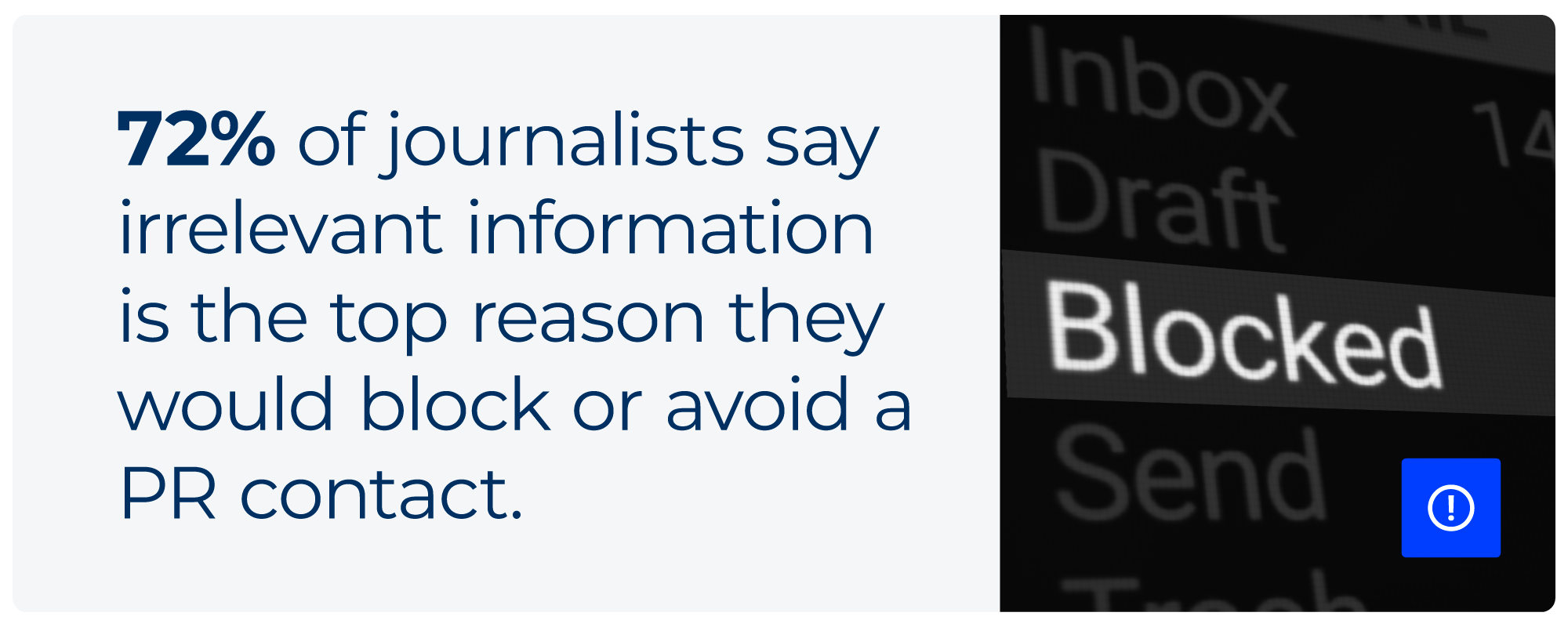
Cision's 2026 State of the Media report shared that 72% of journalists say irrelevant information is the top reason they would block or avoid a PR contact.
Make the brand’s relevance clear
If the story you are pitching has no clear link to the brand, the coverage is less useful. Not only that, but it becomes harder for journalists to understand why the brand is commenting, and it makes it harder for search engines to connect the coverage to the topics the brand needs authority in.
The campaign should sit naturally within the brand’s expertise. For example:
- A travel brand talking about family holiday costs makes sense
- A finance brand talking about pension data makes sense
- A property brand talking about empty homes makes sense
- A cybersecurity brand talking about business data breaches makes sense
Every campaign does not need to mention a product - this sits more within the traditional PR realm - but it should help build the right associations around the brand. This is one of the key differences between traditional PR, Digital PR and AiPR®, where the focus and intended outcome of the coverage can vary.
Create angles for different media types
A strong dataset often has more than one story. Get a strong dataset first and foremost, and the campaign might support a national headline, regional breakdowns, trade commentary, consumer advice, and business analysis - ticking off all top-tier link locations.
Each of these story angles should ideally be planned before outreach begins, so each journalist receives the most relevant version of the story. This ensures your outreach is more tailored to the journalist receiving it - especially when 88% of journalists say they disregard pitches that do not match their coverage area.
Digital PR angle cheat sheet
✔️ For national news, lead with the strongest public interest angle
✔️ For regional media, lead with the local data
✔️ For trade press, lead with sector impact
✔️ For consumer titles, lead with practical advice
✔️ For finance media, lead with cost, risk or market change
If you don’t have the time or resources to do digital PR yourself, then you may want to pay a digital PR agency to do this for you. You can tap into their expertise, knowledge, and experience, which will allow you time to focus on other aspects of running your business.
This may seem like an added expense, but when the estimated all-in cost of an in-house digital PR team is between £300,000 and £450,000+ per year, it quickly seems a more favourable option.
Outreach in the UK: How to succeed with UK journalists
In the UK, journalists are working quickly, often around morning editorial meetings, live news lists and tight deadlines. Your pitch needs to make the story clear quickly, explain why they should care, and show why it is relevant to that journalist’s audience.
The most successful outreach is all in the pitch you send, which gives the journalist a story they can grasp quickly, trust, and use.
Pitch timing
Following a Q&A session with journalist Anya Meyerowitz, we noted that the best time to send pitches is usually between 8:30am and 10am, ideally before 9:30am. This gives journalists time to read the story before morning editorial meetings, where story ideas are often discussed.
Pitches sent after 3:30pm are more likely to get buried under the next morning’s emails, especially if they are not time-sensitive.
The best time to send pitches is usually between 8:30am and 10am, ideally before 9:30am.
This does not mean every story must be sent at the same time. But as a general rule, UK outreach works best when it fits how journalists plan their day.
This is backed by journalist Rosie Taylor’s Substack guide to press deadlines, based on conversations with senior journalists at major UK news publications, which explains that daily newsrooms often work around morning and afternoon editorial conferences. Journalists are usually busiest in the hour before these meetings, when they are submitting story ideas and preparing their news lists.
For urgent or on-the-day stories, this means early outreach is usually best. For many UK nationals, pitches need to land in inboxes before the morning conference if they are going to be considered for the day’s news list. For longer-term features, exclusives or embargoed stories, late morning to early afternoon is often a better window, when journalists have more space to consider future coverage.
As a general guide:
- Urgent news and reactive comments should be pitched early, often before 9am or 10am.
- Longer-term exclusives often sit better between late morning and early afternoon.
- Embargoed stories can work well the previous afternoon, especially when a publication needs time to plan.
- Reactive outreach needs sign-off agreed before the news moment happens.
The exact timing depends on the publication, desk and story type, but the idea is to pitch when the journalist is most likely to be able to use the story, not simply when the press release is ready.
Pitching cheat sheet
✔️ Mail Online: 7am - 7.30am
✔️ The Times: Before 8am but 9am latest
✔️ The Telegraph: Before 8am
✔️ The Independent: To section editors before 8am or to journalists by 10am
✔️ The Mirror: After 7am but latest 10am
✔️ The Express: After 7am but latest 10.30am
✔️ The Guardian: Before 9am
✔️ The Sun: Anytime throughout the day but pre-10am is ideal
Download our PDF detailing national publication pitching times.
Download now
Clear subject lines
A subject line should help the journalist understand the story - and quickly. From our 10+ years of digital PR experience, we recommend keeping subject lines clear, descriptive, and searchable - ideally around five to seven words long.
UK journalists receive too many pitches to spend time decoding vague wording, so the subject line needs to show the value of the story before the email is opened.
For example:
 Revealed: UK’s most Instagrammable wedding venues
 You won’t believe these stunning locations
Our research into more than 1,000 digital PR subject lines also found that question-based subject lines had a 13% lower open rate than subject lines without questions. Subject lines with four to eight words had the strongest open rates on average.

In addition to this, BuzzStream’s analysis of more than 6 million PR email subject lines found that phrases such as "study finds" and "data reveals" performed strongly, while subject lines starting with bracketed text, such as “[Expert comment]”, had the highest open and reply rates.
A good subject line should tel the journalist what the story is about before they even open the email.
Subject line cheat sheet
Include:
✔️ The strongest stat
✔️ The relevant location
✔️ The sector or audience affected
✔️ An exclusive, where one is being offered
✔️ A clear format, such as "[Expert comment]" or "[New data]"
Lead with the "why now"
One of the most important parts of a UK pitch is the "why now", as journalists need to know why the story should be covered today, this week or this season versus the hundreds of other pitches that land in their inbox. If the pitch does not explain why the story is timely, it becomes easier to ignore.
Strong "why now" triggers can include:
- Seasonal relevance - such as wedding season, Christmas, school holidays or Black Friday
- New data, research or FOI findings
- A clear shift in consumer behaviour
- A live news event
- An industry change or policy update
- A trend backed by search, social or Reddit data
The "why now" should appear near the top of the pitch, ideally in the opening line. For example, a wedding venue story is stronger when it opens with wedding season and rising searches for wedding venues, rather than starting with the client or methodology.
Keep the pitch tight
Every pitch should have a short introduction email that gives the journalist the key story quickly. The full press release can then sit below the signature, so the journalist has more detail if they need it.
The intro pitch should include:
- The hook
- Why the story matters to their audience
- Why it matters now
- The client name and homepage link
- Two to three key findings
- A clear question asking whether they would be interested in covering it
This keeps the email useful without overwhelming the journalist. They should be able to understand the story in a few seconds, then scroll down if they want the full release.
Follow-up properly
Follow-ups are part of good outreach, but timing and tone matter. As a general guide:
- For breaking news, a follow-up the next morning can be useful if the story is still relevant
- For standard pitches, waiting two to three days is usually bette
One follow-up is generally enough unless the journalist asks for more information. BuzzStream's State of Digital PR survey reported that over half (55.4%) of respondents said they follow up only once, and an additional 33.1% follow up twice.
Similar findings are reported in Muck Rack's The State of PR 2026 report, where 41% say one follow-up is acceptable, and 40% say two.
BuzzStream saw a 9% increase in the number of people sending two follow-up emails in 2026, versus last year. So if you're on the fence about sending follow-ups, remember that other PRs are doing it too.
What makes a good follow-up?
A good follow-up email should be short and sweet, and should remind the journalist of the main story, repeat the strongest findings and ask whether it is of interest. It should not feel like a new pitch or a pressure tactic.
If there is a new development, updated data or extra context, include it. But if not, keep it simple.
Download our journalist pitching guide, including a pitch structure, sample email, follow-up template and the do’s and don’ts for UK digital PR outreach.
Download now
Build relationships after coverage
Contrary to popular belief, outreach does not end when the link goes live. When a journalist covers your story, a short "thank you" email can help build the relationship for future campaigns. It shows that you saw the article, appreciated the coverage and understand the value of their work.
The email should be sent within 24 to 48 hours of publication. It can reference the article, mention that the client was pleased and, where relevant, offer related research that fits the journalist’s beat.
Long-term journalist relationships are built through useful, relevant outreach over time - positive journalist feedback is something we are very proud of. That means keeping records of what journalists cover, how they respond, which stories they use and what feedback they give.
We are proud of the relationships we have built
How UK links support SEO, GEO and brand authority
UK digital PR has always played a role in search performance. A strong link from a relevant publication can help search engines understand the authority of your site, the topics your brand is connected to and the pages that deserve to be trusted.
This is still important today - especially in competitive sectors where brands are fighting for visibility across high-value commercial terms.
But what has changed is the way people find and compare brands. Search doesn’t just mean Google anymore, it also includes AI Overviews, ChatGPT, Perplexity, Gemini and other AI platforms. In those spaces, third-party evidence is key as AI systems need sources they can retrieve, understand and use when forming answers.
This is where UK digital PR has a wider role. Links still support authority and rankings, but brand mentions, expert quotes, listicles, case studies and cited data also help shape the wider evidence base around a brand.
 Links that support rankings
Links remain one of the most obvious ways digital PR supports SEO.
When a relevant UK publication links to your site, it helps connect your brand to a topic, sector or customer need. This is especially useful when links point to, or support, pages that matter commercially, such as category pages, service pages, product pages, guides or data-led assets.
For example, a finance brand earning links from business and money publications helps strengthen its authority around financial topics. A travel brand earning links from national and consumer travel titles helps reinforce its relevance in that space. A B2B brand earning trade links can build topic authority in a way that broad national coverage may not.
This is why link quality should not be judged by domain rating alone. Authority matters, but relevance, context, anchor text, page placement, and the page being supported all affect the value of the link.
For digital PR to support SEO properly, the campaign should be planned around the pages and topics the brand needs to grow. Otherwise, coverage can look impressive on a report while doing very little for organic performance.
 Coverage that supports brand trust
Digital PR also helps create the third-party proof people look for before they trust a brand.
A customer searching for a product, service, or provider rarely makes a decision from one page. They compare options, read reviews, check expert commentary, look at roundups and use trusted publications to sense-check who they should consider.
This is where UK coverage becomes valuable beyond the link itself. A mention in a relevant publication can support brand credibility, especially when the story includes a named expert, original data, a case study or practical advice.
This is also why source quality matters. As publishers face more AI-generated content, weak commentary and concerns around fake experts, verified spokespeople and real case studies become more valuable. A named expert quote in a trusted publication gives journalists a credible source and readers a clearer reason to trust the brand behind the story.
For brands in sectors such as finance, insurance, healthcare, property, legal services and B2B, this kind of proof is especially important. The coverage helps show that the brand is active, informed and relevant within its market.
 Mentions that support AI visibility
AI systems rely on the information they can retrieve from across the web. They look at third-party sources, brand mentions, comparison pages, listicles, reviews, citations, expert commentary and onsite content to understand what a brand does.
This shift is already changing how digital PR is measured. BuzzStream’s 2026 State of Digital PR report found that 76.4% of digital PR professionals believe AI has fundamentally changed how they work, while 78.4% now track AI visibility for clients.
An Ahrefs study of 75,000 brands also found branded web mentions had the strongest correlation with AI Overview brand visibility. For brands, this means digital PR now has a wider job. Of course, links still matter and digital PR isn’t dead - it’s evolved like everything else.
For example, a link from a relevant publication is still valuable, but so is a clear brand mention in the right context. If a UK publication includes your brand in a "best X" listicle, quotes your expert on a topic you want to be known for, or references your original data in a relevant article, this coverage helps to create an all-important evidence base around your brand.
This is where digital PR overlaps with AiPR® - Reboot’s offsite approach to GEO. AiPR® builds on digital PR by planning coverage around how AI systems retrieve, summarise and cite information. The focus is on strengthening the evidence around a brand, so AI systems can better understand what it offers, which topics it should be associated with and when it should be considered in AI recommendations.
That might include:
- Earning relevant links and brand mentions in trusted publications
- Securing expert commentary around the topics a brand needs to own
- Improving presence in listicles and buying guides
- Using original data to create citable third-party coverage
- Making sure onsite assets have clear methodologies and evidence
- Tracking brand mentions, citations and appearances across AI platforms
For UK brands, the opportunity is to make PR coverage work harder. The same campaign can support rankings in Google, improve brand trust with potential customers and give AI systems clearer third-party evidence about what the brand should be known for.
Why choose Reboot for digital PR
Our organic search marketing agency has spent more than a decade earning links for brands in the UK and internationally, earning us prestigious accolades such as 'Best Large SEO Agency' at the UK, European and Global Search Awards.

Reasons to choose Reboot as your digital PR agency
 We are data-led
Our approach is none other than search-led. We plan digital PR around authority gaps, priority pages, organic performance and brand relevance. We use data, FOIs, expert insight and strategy to earn coverage that supports visibility over the long term.
We have a PhD-level in-house data team
Having one of the largest in-house data teams of any UK search agency helps us build campaigns with stronger datasets, clearer methodologies and more credible stories.
We have a strong track record
Across recent years, Reboot has earned more than 48,000 backlinks for clients. Our digital PR work is supported by SEO, GEO, content and data specialists, which means campaigns are planned with search impact in mind from the start.
We help future-proof brands
Our digital PR work is also shaped by how search is changing. We look at the publications influencing Google results, the third-party sources appearing in AI answers and the topics a brand needs to be associated with. This means campaigns are planned to support links, rankings, brand authority and AI visibility, rather than coverage in isolation.
For UK brands, digital PR should sit within search strategy rather than separately from it. The right links help build authority. The right coverage helps build trust. The right mentions help shape how search engines and AI systems understand your brand.
Planning digital PR in other markets?
The UK has its own media habits, journalist expectations and pitching style - but the same can be said for every market. If you are planning campaigns across multiple markets, our international digital PR playbook explains how to adapt your strategy for different regions - including the following market guides:
- Guide to digital PR in Germany
- Guide to digital PR in Spain
- Guide to digital PR in France
- Guide to digital PR in the USA
- Guide to digital PR in Canada
- Guide to digital PR in Australia
If you're still weighing up which countries to focus on, our guide to the questions to ask before entering a new market can help you identify where the strongest opportunities lie and what to review before deciding where to invest.
Need help earning UK or international links?
If you want to build authority in the UK, our digital PR team helps brands earn relevant coverage that supports rankings, brand visibility and long-term organic growth.
Speak to our team to find out how Reboot helps brands get found online.
Get in touch