


- Reasons why SEO and PR teams become disconnected
- Start with the shared business problem
- Agree roles before campaign planning begins
- Choose the right working model
- Plan campaigns around search and media value
- Measure the combined effect
- How SEO and digital PR can successfully partner
- How Reboot works with internal teams
_____ SEO and PR team collaboration
How SEO and digital PR teams can work together
SEO and digital PR are typically managed as separate channels, even though both are expected to contribute to the same organic growth targets. An SEO team may know where a brand needs greater authority, while a digital PR team knows how to turn that need into a story journalists will cover.
The relationship can become more complicated when a business already has an in-house PR or communications team. More often than not, media relationships and press outreach may already sit with that team, leaving SEO leads unsure whether external digital PR support would complement its work or intrude on it.
These teams don't need to compete for control. When responsibilities are agreed early doors, SEO teams can identify where authority is needed, digital PR can find credible ways to earn it and internal PR can protect the brand’s existing relationships.
Reboot started out as an SEO agency back in 2012, and search still remains at the centre of our digital PR work. Today, our SEO specialists work alongside the largest digital PR team in the UK, supported by in-house data specialists and native-language teams in key international markets. This enables us to plan campaigns around organic priorities while adapting delivery to the way each client’s internal teams work.
Reasons why SEO and PR teams become disconnected
SEO, digital PR and PR teams each have different areas of expertise. Even though that is a strength, it can also lead to conflicting priorities when nobody has agreed how the work fits together.
SEO teams are usually measured against organic visibility and commercial performance, while digital PR teams may report primarily on links and coverage. An internal PR team has a different remit again, often taking responsibility for corporate communications and established media relationships.
Problems arise when organic search targets are considered separately across SEO, digital PR and traditional PR.
A campaign may earn coverage in well-known publications without addressing the areas where the website needs greater authority. An SEO brief may focus so narrowly on a target page or keyword that there is little room to create a story journalists will cover.
There can also be operational concerns. Two teams might unknowingly contact the same journalist, while a campaign developed without internal PR input may conflict with an upcoming announcement or established brand message.
Better collaboration does not mean asking every team to use the same targets. It means agreeing what the work is intended to achieve and how each discipline will contribute.
Start with the shared business problem
The conversation should begin before campaign ideas are discussed.
A request for “more links” does not give a digital PR team enough information to plan useful activity. Equally, a creative campaign idea does not automatically become valuable to search simply because it earns coverage.
The teams first need to agree on the business problem behind the work.
This could be:
- A priority service being outranked by established competitors
- Weak authority around an important product category
- Limited visibility within a new international market
- A commercial section of the site lacking relevant external references
- A brand being associated with the wrong subjects online
- Organic performance falling despite technical and content improvements
The SEO team can then explain what the available data shows. This may include competitor backlink gaps, priority pages, ranking movement and areas where existing content is not receiving enough external support.
The digital PR team can assess whether those priorities create a realistic media opportunity. Its role is not to turn each target keyword into a press release. It is to find a credible connection between the brand, the search priority and a subject journalists are likely to cover.
An internal PR team adds further context. It understands the company’s existing messages, relationships and internal approval routes. It may also know which stories have already been covered or which subjects need to be handled carefully.
The strongest campaign opportunities tend to sit where search value, brand relevance and editorial demand overlap.
Agree roles before campaign planning begins
Many concerns about external digital PR come down to unclear ownership.
An in-house PR team may reasonably question why an agency needs to contact journalists on its behalf. At the same time, the SEO team may feel that the site’s need for stronger authority is not being addressed. Without a clear brief, the agency is left unsure which relationships and subjects are available to it.
Agreeing responsibilities before any work begins can prevent much of this tension.
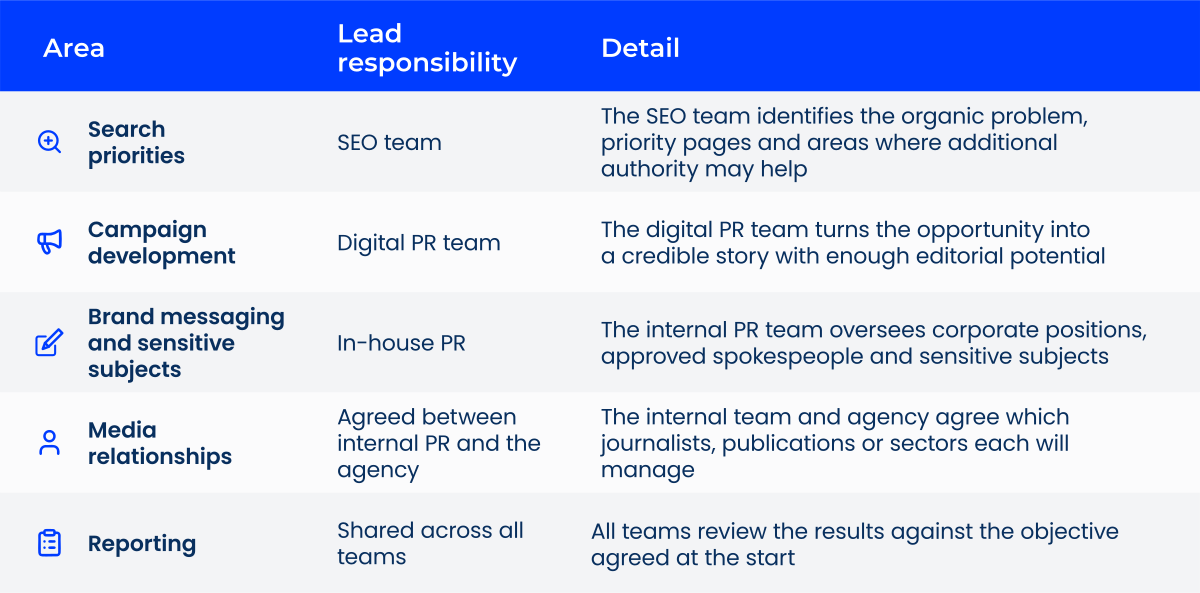
Media relationships
The internal PR team should share any existing relationships or restrictions that could affect outreach.
Muck Rack’s 2025 survey of journalists found that 84% received at least some story ideas through PR pitches, but 86% would disregard pitches that were not relevant to their beat. Half also said their relationships with PR professionals were important to their success.
That makes co-ordinated outreach important. Duplicate messages or poorly targeted pitches not only waste time, but can also weaken relationships the internal team has spent years building.
This doesn’t require handing an agency its full media database. The teams may instead agree that certain journalists, publications or sectors remain under internal ownership.
The external digital PR agency can focus on other opportunities, such as niche industry titles, consumer publications, regional media or target markets where the brand has fewer established relationships.
There should also be a clear process for logging outreach so journalists do not receive several messages from different people representing the same company.
Search priorities
The SEO team should lead on the organic problem the work needs to address.
This means explaining:
- Which areas of the site are commercially important
- Where competitors hold a clear authority advantage
- Which pages or topic groups need external support
- Whether the priority relates to rankings, a market or broader brand authority
- What other SEO work is already underway
The brief should provide direction without prescribing every campaign idea or target publication.
Campaign development
The digital PR team should lead on turning the opportunity into a viable media story.
Depending on the campaign, this may involve original research or Freedom of Information (FOI) requests. Other opportunities may stem from expert commentary or existing company data (like product sales or demographic insights).
At Reboot, this work is supported by our in-house data specialists. Their analysis helps our digital PR teams find defensible stories and produce research that can withstand scrutiny from journalists.
The agency should be able to explain why the subject is relevant to the search goal, but it must also have enough freedom to create something newsworthy.
Brand and corporate messaging
An internal PR or communications team should retain oversight of sensitive messages, corporate positions and approved spokespeople.
Its involvement is especially important when the campaign touches on regulation, company policy or a subject that could affect reputation.
Agreeing this role early is more efficient than asking the internal team to approve a completed campaign shortly before outreach begins.
Reporting
The teams should decide which results will be reported together.
digital PR delivery may include earned links, publication relevance and where the coverage pointed. SEO reporting may assess performance across related pages, keywords and organic traffic.
Internal PR may also want to review message inclusion, journalist feedback or the quality of the brand’s representation.
No single scorecard needs to replace the others. The important point is that everyone understands how the results relate to the original objective.
Choose the right working model
External digital PR support does not need to follow an all-or-nothing model.
The best division of work depends on the organisation’s internal expertise, media policies and available capacity.
Agency delivery
The agency develops the campaign, produces the assets and handles outreach.
The internal PR team retains oversight of the brand’s messaging and important media relationships. SEO specialists remain involved throughout to ensure the work still addresses the original search priority.
This can work well when the business needs additional campaign capacity or does not have a dedicated digital PR function.
It is also useful when the agency is targeting markets or publications beyond the internal team’s usual remit.
Shared delivery
The internal team and agency divide the outreach.
This could be based on existing journalist relationships, publication type or geography. For example, the internal PR team might manage national business journalists while the agency covers relevant consumer, regional and specialist titles.
Both teams should work from the same approved materials and keep outreach records up to date.
This model allows the brand to retain important relationships while benefiting from additional resource and specialist digital PR experience.
Internal outreach
Some organisations require all journalist contact to remain in-house.
In this model, the agency can still identify the search opportunity and produce the research behind the campaign. It may also prepare the assets and media plan for the internal team to use.
It can identify potential angles and prepare outreach materials, while the internal team sends them using its established contacts.
This is a useful option for brands in tightly regulated sectors or businesses with strict communications policies. It can also support an internal press office that has strong relationships but limited capacity to produce search-led campaigns.
Specialist market support
A further option is to divide activity by country or market.
An internal UK PR team may be well placed to manage its established domestic relationships but lack the language skills or local knowledge needed for international outreach.
External specialists can develop and localise stories for those markets without disrupting the brand’s existing UK activity.
The important point is to agree the model rather than allow it to develop informally once a campaign is already underway.
Planning digital PR across new markets?
Our international digital PR playbook explains how to plan campaigns for different countries, from localising stories to managing outreach across markets.
Explore the playbook
Plan campaigns around search and media value
Once responsibilities are clear, the teams can plan the campaign itself.
SEO insight should inform the opportunity without reducing the brief to a list of keywords.
Before ideation, the SEO team should share the relevant site and competitor context. The digital PR team can then consider which subjects provide enough editorial scope.
Internal PR should be involved at this stage, particularly when there are established journalist relationships or sensitive areas to consider.
Before the campaign launches, the teams should agree:
- The main objective
- Which audiences and publications are relevant
- Where any earned links should point
- What approvals are required
- How outreach will be divided
- Which results will be monitored
Decide where links should go
Not every campaign needs to point directly to a product or service page.
Journalists may be more likely to link to an original study or useful resource. In these cases, the SEO team can then assess how that page fits within the rest of the site and use internal links to direct authority towards relevant commercial content.
The onsite asset should be agreed before outreach begins, and should be live and indexable.
Its relationship with the campaign should also be clear. Asking journalists to link to a loosely related page purely because it has commercial value can reduce the likelihood of securing a link.
This is becoming increasingly important as brands look beyond traditional search results. Through our proprietary, trademarked AiPR® framework, digital PR activity can also help strengthen the third-party signals AI systems use when deciding which brands to mention, cite or recommend.
As a result, campaign planning may need to consider not only where a brand needs stronger authority in Google, but also which topics and external sources influence its visibility in AI answers.
Prepare supporting content
Some campaigns require a dedicated on-site asset. Others may support an existing category, guide or research page.
The onsite content must contain enough useful information to justify the reference. For a data-led campaign, this usually means publishing the findings and explaining how the data was collected. Commentary from an expert may also help readers understand what the results mean.
Our Hyper-Relevancy Projects, for example, combine SEO topic research, original data and content production to build evergreen assets capable of earning relevant links over time. digital PR can provide the first burst of coverage, while the asset continues attracting links through its rankings and usefulness to journalists.
Our Hyper-Relevancy playbook details how this type of content is planned, produced and used to support long-term authority.
This is one example of SEO, content, data and PR contributing at different stages rather than operating as separate services.
Create an asset that keeps earning links
Our Hyper-Relevancy Projects combine search insight, original data and expert content to create useful resources with long-term link-earning potential.
Explore HRP
Set realistic approval times
Slow approvals can weaken even a well-planned campaign.
A data-led story may have a longer review window, while a reactive opportunity could need approval on the same day.
The internal team and agency should agree who signs off the concept, findings, press materials and spokesperson comments. They should also decide what can be approved in advance. This gives the brand control without adding unnecessary delays at every stage.
Measure the combined effect
Link totals provide useful delivery information, but they do not explain the full effect of a campaign.
The teams should report against the objective agreed at the start.
For a campaign intended to strengthen authority around a priority topic, this could include:
- The relevance of linking publications
- New referring domains within the sector
- Coverage pointing to the intended asset
- Visibility changes across related keyword groups
- Performance of the internally linked pages
- Referral traffic from earned coverage
Where data is available, the report can also assess organic enquiries or revenue.
The results need to be interpreted carefully. SEO performance is affected by technical changes, content, competitor activity and search updates, alongside earned links. It would be misleading to attribute every ranking movement to one digital PR campaign.
Instead, reporting should show what changed, when it changed and how the results compare with the agreed priority.
Search is also no longer limited to traditional results pages. Relevant third-party coverage can affect the sources and brand associations that AI systems draw upon when generating answers.
Where AiPR® is part of the schedule of work, teams can monitor brand mentions, citations and visibility across agreed prompts alongside traditional SEO reporting.
How SEO and digital PR can successfully partner
Our work with cybersecurity company Indusface highlights why technical SEO and digital PR should not be treated as alternatives.
The brand wanted to improve rankings and attract more organic enquiries. However, it first needed to address technical and on-site issues while building a stronger backlink profile within a competitive sector.
We began with an in-depth SEO audit covering technical performance, keyword targeting, content opportunities and competitor backlinks. This identified what needed to change on the site and where additional authority could support performance.
Our digital PR team then ran data-led campaigns and ongoing reactive activity focused on relevant technology and cybersecurity publications.
The campaigns earned 113 backlinks with an average Domain Rating (DR) of 53. Over the same period, Indusface began ranking in the top 100 for around 1,500 additional organic keywords. Year-on-year organic clicks rose by approximately 36%, while impressions increased by 31%.
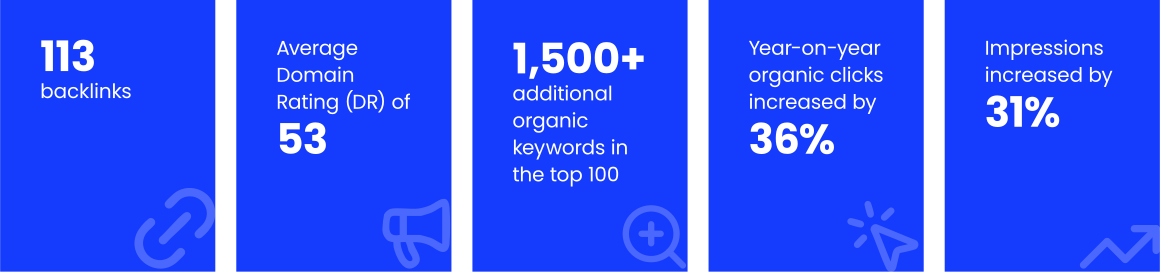
The result did not come from choosing SEO or digital PR. Technical and content improvements created stronger foundations, while relevant earned coverage helped the brand build the authority needed to compete.
This is also why it is important to judge combined work against more than the number of links delivered.
Read how our technical SEO and digital PR teams worked together to strengthen Indusface’s backlink profile and increase its organic visibility.
Read the case study
How Reboot works with internal teams
Reboot started as an SEO agency, and search remains at the centre of how we plan digital PR.
Our team has earned more than 48,000 client backlinks worldwide, but link volume alone does not determine whether a campaign has worked. We begin by understanding the pages, markets and topics with the greatest commercial value, then use media insight and original data to find credible ways to build authority around them.
This does not mean replacing an internal PR function.
We can lead campaigns and outreach, divide media activity around existing relationships or support an in-house team with research and campaign production. The right model depends on how your teams work and where additional expertise is needed.
With SEO, digital PR, content and data specialists working together, we can make sure earned coverage directly supports the organic search challenges it is intended to support.
Speak to our team about your organic search strategy.
Contact us
