


_____ REACTIVE DIGITAL PR STRATEGY
How to improve your reactive digital PR strategy
Most reactive PR is a waste of time. Not because the tactic doesn’t work - it absolutely does - but because it’s usually executed half-heartedly and far too late.
Shouting into the void with a templated quote that adds nothing and lands nowhere isn’t reactive PR, it’s performative filler dressed up as strategy. Yet that’s the pattern we see most often when reactive work isn’t supported by the structure and decision-making you’d expect from a digital PR agency.
Why most reactive PR strategies go wrong
 You’re reacting too late
The biggest reason your reactive PR isn’t landing is simple - you’re too slow.
In today’s media landscape, being reactive means working at the speed of social, not emailing over a "comment for consideration" 24 hours after a story has already peaked.
Journalists aren’t waiting for your take. If you’re still drafting a press release while others are already on their second wave of coverage, you’re simply not in the conversation.
Proper reactive PR requires agility, which sounds obvious but is often overlooked. That means sign-off processes that don’t resemble an episode of Black Mirror. It means briefing spokespeople in advance, building quote libraries and actually trusting your team to move without asking for permission six times.
Example: Speed and relevance done properly
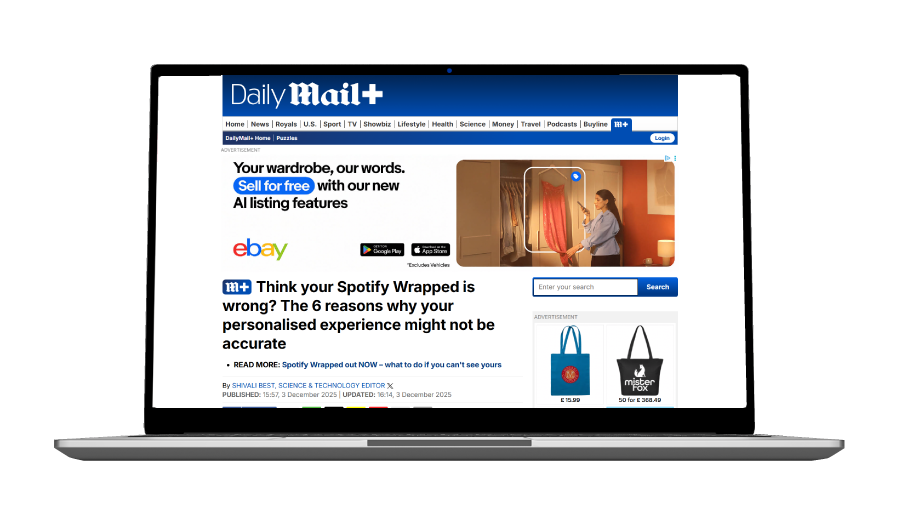
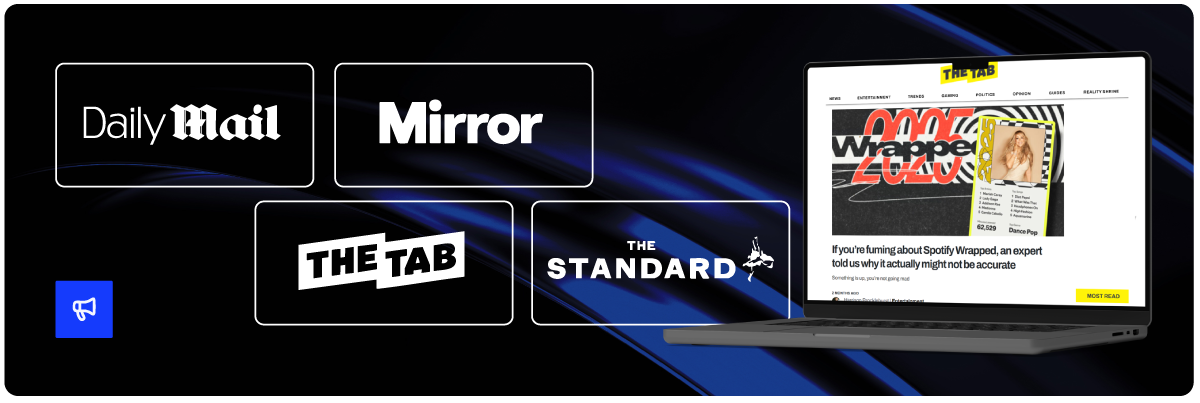
For a client in the entertainment ticketing space, we spotted an emerging cultural moment - the Spotify Wrapped phenomenon.
By predicting the launch window, we gave ourselves time to prepare a genuinely useful tips piece that addresses a common gripe every year - why your Spotify Wrapped 2025 might be off.
Instead of posting a generic "Isn’t Spotify Wrapped great?" comment, we delivered actionable advice people actually cared about.
Results:

Commentary adds no value
We also need to talk about quality. A hastily written two-line quote that hedges every opinion and sneaks in a gratuitous brand mention isn’t thought leadership. It’s fluff. And editors can smell it from a mile off.
If your idea of reactive PR is to agree with the prevailing narrative, politely drop in your CEO’s name and hope for a backlink, you’re missing the point. Good reactive content changes the angle. It adds context, challenge, or insight - something that wasn’t already there.
Lazy commentary doesn’t just get ignored. It actively undermines your credibility the next time you pitch. And if your insights consistently amount to “we welcome this news”, congratulations: you’ve become white noise.
Relevance is forced
The most painful failure of bad reactive PR is relevance - or more accurately, the lack of it. Every time a brand jumps on a trending topic they have no business commenting on, journalists switch off.
No, your vegan dog food startup does not need to comment on the housing crisis. And no, your fintech brand doesn’t need to weigh in on the BAFTA nominations.
Just because something’s trending doesn’t mean it’s for you. Forced relevance reads as desperate, and at its worst, tone-deaf. Audiences can tell when you’re inserting yourself for visibility rather than value. And in an age where screenshots live forever, that kind of performative PR doesn’t just fall flat - it backfires.
Reactive PR only works when done properly
Reactive PR is one of the most effective and efficient ways to drive visibility and secure genuinely valuable coverage - if it’s done properly. But most brands treat it like an afterthought.
To make it work, you need structure, speed, and to stop being afraid of saying something with teeth.
The key is to be early and say something that actually makes people think. And just as importantly, know when to stay quiet - because not every story needs your brand referenced. That’s the difference between being in the news and watching it happen.
Reactive PR is a core part of an effective campaign. Take one of our sports entertainment clients as an example. Over a three-month period, we generated 193 high-value links. Of those, 74 (38%) came directly from reactive work, with the remainder coming from larger data-led campaigns.
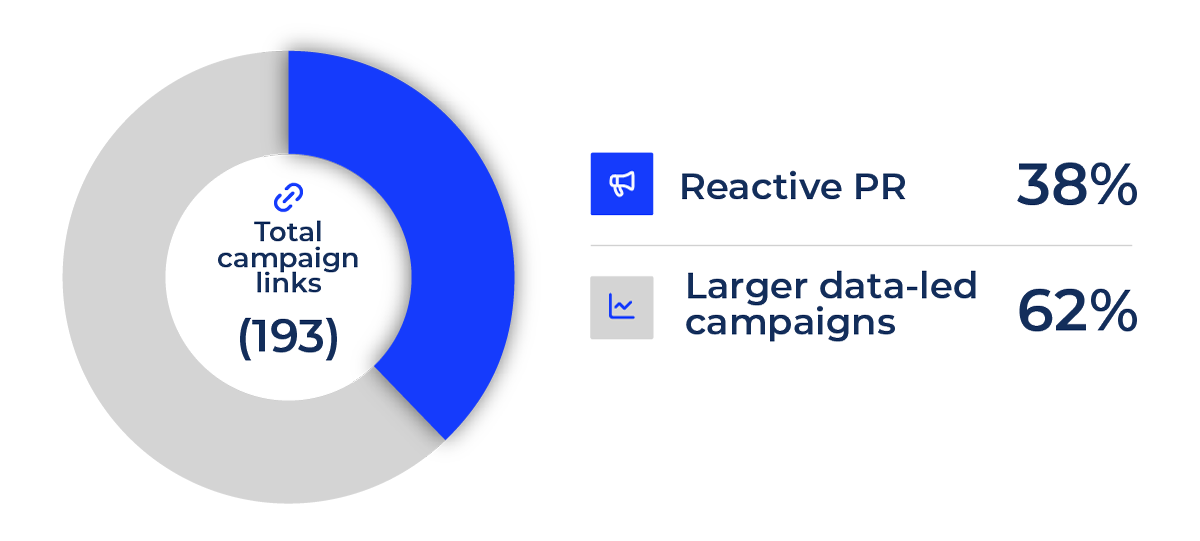
Seeing it laid out makes the point clear - reactive PR shouldn't be an afterthought. It delivers a substantial slice of impact, driving coverage and links that planned campaigns alone can’t achieve.
How to fix your reactive digital PR strategy
If you’re relying on what’s trending on X by the time someone mentions it in your Monday stand-up, you’ve already missed the reactive opportunity.
Good reactive PR isn’t about luck or "being on it", but about building a system that makes missing the story almost impossible.
Here’s how you make that happen:

 Set your inputs properly
Your team needs broad-spectrum trend coverage, otherwise you're just playing journalist cosplay. Consider setting up a daily dashboard (or split it between team members) to cover the following:
| Platform | What it helps you spot |
|---|---|
| Google Trends (global and UK) | Obvious but underused. Set notifications for key topics. Bookmark the daily trending tab. |
| Pinterest Trends | Especially for home, fashion, wellness and retail brands. Tells you what people want before they start Googling it. |
| TikTok | This is where stories start now. Follow trending audio and #ForYou content to track which challenges or hooks are going viral. |
| A goldmine for sentiment and early chatter. | |
| X (Twitter) | Still useful for real-time news and journalist sentiment, but it’s just one channel. Use Lists, mute the noise, and focus on news and expert voices. |
| YouTube trending | Particularly relevant for entertainment, influencer and youth-culture-adjacent clients. |
| Instagram Explore / Reels | Monitor how trends are visualised and localised. This often predicts how brands can (and will) ride them. |
You might also want to assign platforms by sector.
Automate
| Tool | How it helps with reactive PR |
|---|---|
| Google Alerts | Not just for your brand name. Set them for key product categories, macro topics, known competitor pain points and themes you want to be known for. |
| Talkwalker Alerts | Better than Google Alerts if you want a wider social and news sweep. |
| Feedly | Organise industry blogs, regulatory bodies, trade mags and national media into themed boards. It’s your daily brief in a scroll. |
| BuzzSumo / NewsWhip / Exploding Topics | See what’s just about to break. These tools tell you what’s catching fire before it's everywhere. |
Treat social like a radar, not a broadcast tool
Social media can be where you get the fastest intelligence. Set up a “platform check-in” every morning and every afternoon and monitor things like:
- TikTok trending hashtags and audio
- Pinterest’s top searches and trends
- Reddit rising posts in key subs
- Google Trends daily updates
- X (Twitter) trending tab and your curated lists
- Instagram Reels
Do this right, and your team will know when a trend is bubbling - that’s the moment you jump.
Build a war room, not just a Slack thread
Your "PR chat" is not good enough.
You need:
- A shared, centralised ‘Hot Topics’ channel on Slack, Teams or equivalent
- A daily rota of who’s scanning what (split by platform or industry vertical)
- One click-to-alert process (if something breaks, the strategist, writer and sign-off contact should be tagged immediately)
No hesitation. If the story’s relevant, everyone gets moving.
Plan for reactive moments in advance
This is where reactive PR stops being chaos and starts being ROI-positive.
Build an editorial calendar of:
- Expected dates: Budgets, product launches, regulatory rulings, sporting events, cultural moments, awareness days
- Seasonal relevance: If you know the weather’s about to break 30°C or drop to sub-zero, have your commentary and campaign angle ready yesterday
- Pre-approved talking points: Get sign-off on holding statements and expert quotes in advance. That way, you’re not chasing someone for “a few lines” while the story’s already live
Be early, or be irrelevant.
Reactive PR isn’t what it used to be
There’s a growing wave of online nostalgia for that era, when X moved the internet, trends lingered for days and "real-time" PR really did mean real time. But the platforms have changed - and so has the pace.
At its best, reactive digital PR is a core visibility lever. It earns authoritative links and timely coverage that strengthen topical authority - giving SEO and content something real to compound over time. That’s why we approach it as part of a wider, joined-up organic search strategy.
To be successful, get across the platforms, automate your inputs, build a rapid-response system, and be brave enough to say something fast, first and useful. Otherwise, you’re not doing reactive PR - you’re just reacting.
Want help building a reactive Digital PR strategy that actually earns coverage?
Get in touch
