


Download our exclusive list of top-tier Australian publications.

- Benefits of getting Australian coverage
- The Australian Digital PR landscape
- What works in Australian Digital PR
- Establishing interest and value immediately in the email headline and PR
- Newsworthy ideas lead to quality placements
- Mastering outreach to Australian journalists: How to succeed
- Australian media relationship cheat sheet
- Why choose Reboot Online for Australian Digital PR
_____ DIGITAL PR IN AUSTRALIA
How to land high-quality Australian links
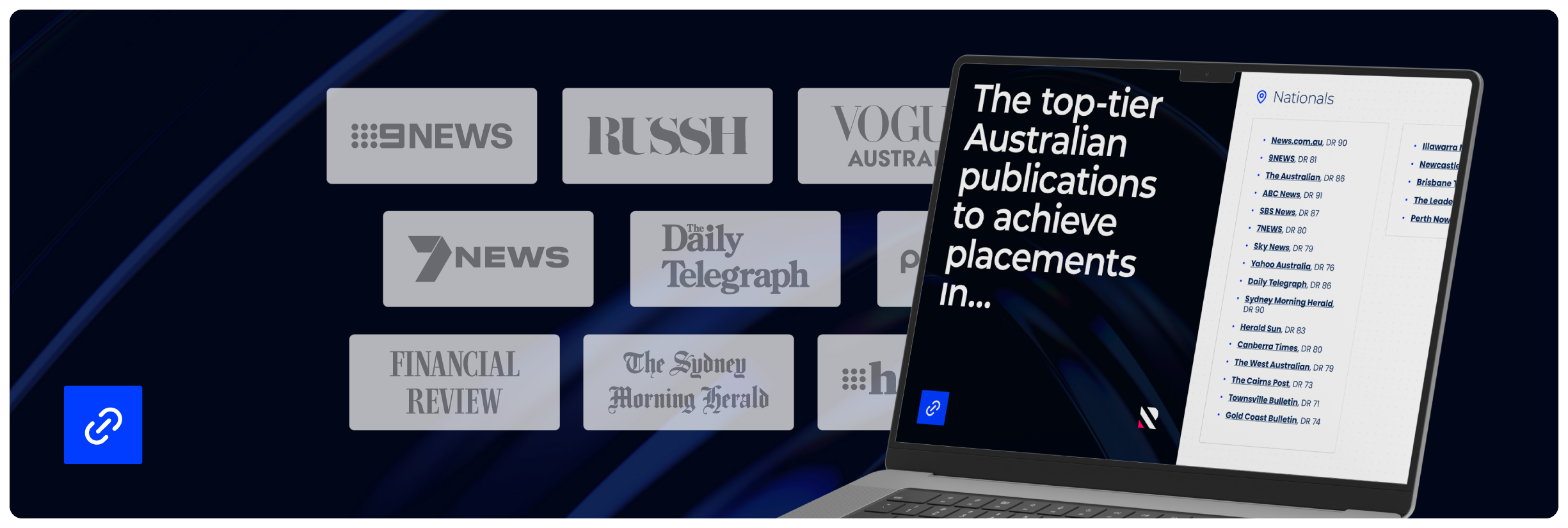
Australia’s digital PR landscape offers a clear opportunity to earn high-quality links, particularly for brands looking to expand into English-speaking markets. For a digital PR agency, Australia often looks familiar on the surface, with shared language, media formats and cultural touchpoints with the UK and US.
However, familiarity can be misleading. While there are similarities, there are also important differences that influence how campaigns land, which publications pick up stories, and what journalists respond to.
As in the UK and the US, competition is high. Estimates from SourceWatch suggest there are around two PR professionals for every journalist in Australia, which makes relevance, data quality and local understanding critical for standing out.
Campaigns that are well-researched, data-driven, and tailored for an Australian audience are far more likely to earn coverage, helping brands build authority, reach new audiences, and strengthen their backlink profile.
Benefits of getting Australian coverage
Diverse backlink profile
Existing campaigns, excluding location- or country-specific research, that have worked well in the UK and the US can sometimes succeed with the Australian audience with some tailoring. Given that Australia is also an English-speaking country with cultural ties to the UK and the US, building links from the Australian market can be low-cost, boosting your backlink profile and setting you apart from your competitors.
Reaching more unique referring domains
Australia has a strong list of national, regional, and lifestyle publications specific to the market. Coverage from these outlets adds new referring domains, helping strengthen authority signals rather than repeating coverage from the same international publishers.
Boost global visibility & brand awareness
Links from Australian publications introduce brands to a new organic audience and support broader international visibility - particularly for companies operating across multiple English-speaking markets.
We can help you elevate your Australian digital PR strategy.
Get in touch
The Australian Digital PR landscape
Australia is often viewed as a familiar market for digital PR. It’s English-speaking, culturally aligned with the UK and US, and shares many of the same media formats and content trends.
That familiarity shapes how many international campaigns approach the market. Australian editions of global titles are usually the first ports of call, including publications like Yahoo Australia (DR76), Sky News Australia (DR79), Vogue Australia (DR81) and GQ Australia (DR75).
But Australia also has a strong set of national publishers with their own editorial agendas, including 7 News (DR80), 9 News (DR81) and SBS News (DR87), alongside a dense network of regional outlets producing city- and town-level coverage.

Despite having a smaller population (around 39% of the UK and 8% of the US), Australia supports a wide range of lifestyle and industry-specific publications. Titles such as IT News (DR79), Business News Australia (DR70), Frankie (DR71) and the Australian Financial Review (DR87) offer additional opportunities to earn relevant, high-quality coverage beyond global brands.
For digital PR, this means campaigns that go beyond familiar international outlets and lean into national and regional relevance consistently perform better.
"The Australian market is rife with opportunity to deliver a more diverse link acquisition strategy at little to no further costs towards translations and dedicated campaign locations that are typically required to gain links from other countries."
James Olliver
Download our exclusive list of top-tier Australian publications.
Download
What works in Australian Digital PR
Campaigns grounded in data consistently outperform opinion-led or lightly researched stories.
While lifestyle and travel topics tend to attract strong coverage, the campaigns that perform best share a common thread: clear methodology, local relevance, and an angle that gives journalists immediate value.
Competition is high. Australian journalists receive a large volume of pitches, which means generic ideas struggle to land. Campaigns need to be precise, well-supported and clearly relevant to an Australian audience.
The strongest campaigns combine:

Well-researched stories, backed by transparent and credible methodology
Local relevance, even when the core topic has global appeal
Regional or city-level data, which performs particularly well with national and regional outlets
Clear news value, aligned to what Australian publications actively cover
How to secure high-authority Australian links
Creative ideation still matters, but success in Australia is driven by how well campaigns reflect local context.
Despite cultural similarities with the UK and US, interest levels, coverage angles and news priorities can differ. Campaigns perform best when they account for:
Seasonal differences
Sports teams
Regional culture and trends
Celebrities
Film and TV
National days and events
And more
Understanding not just what is covered, but how it is framed, makes the difference between coverage and silence.
Campaign examples
"Australia's most beautiful towns and villages, according to social media"
This campaign used a dedicated, localised dataset with a clear regional breakdown. As a result, it earned 15 Australian links across national, regional and industry publications, including TimeOut Australia (DR90), Perth Now (DR78), and the City of Albany government website.
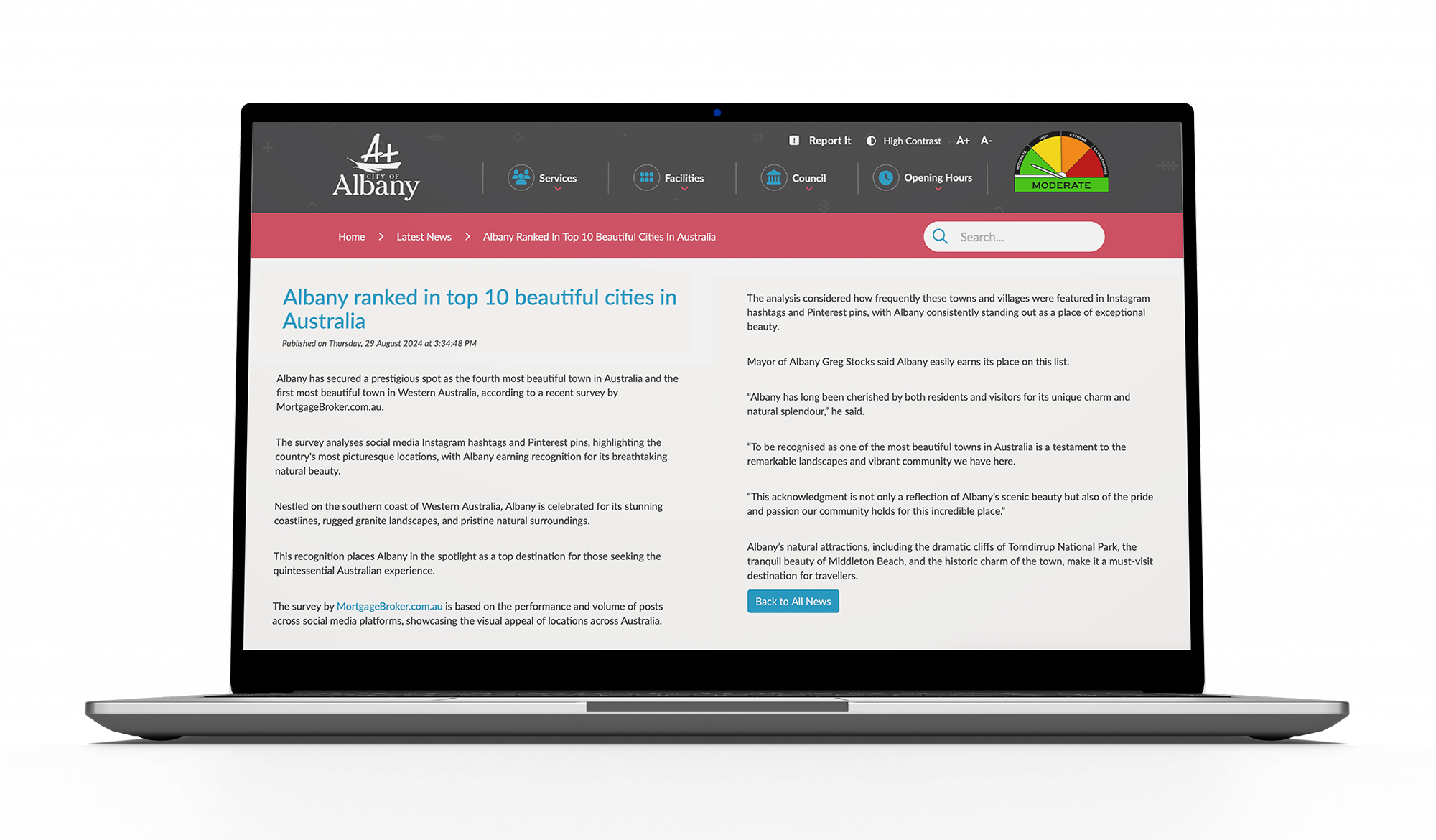
The regional focus made the data immediately usable for local and national outlets.
"What’s hiding on your bathroom towels?"
This survey-led campaign explored bathroom hygiene - a topic with broad international appeal. It earned more than 170 links globally, including coverage from Australian publications such as 7News (DR80) and Medical Republic (DR62).
Because the insight was universally relevant, the campaign required minimal localisation while still delivering strong Australian coverage.
Establishing interest and value immediately in the email headline and PR
This is a core practice for any PR pitch, but depending on the target market, the tailoring required can vary greatly.
Mentioning Australia or a local region within the country isn’t always enough to be of interest. The subject of the study and why the results are of interest to an Australian audience should also feature in the email headline and the PR's opening to help establish relevance.
Example headlines:
- Australia’s Port Arthur ranked as the world’s most abandoned building
- [Study] Australian train ranks in world’s most luxurious journeys
- Rent-to-income ratios revealed in Australia’s capitals, experts comment
- Perth namd best Aussie capital to save for a house, study reveals
- Two beautiful Queensland towns LOVED by social media
- Chasing the sun: Aussie towns that are lighting up your feed this summer
Newsworthy ideas lead to quality placements
Based on our Australian campaign data, relevance consistently outperforms scale.
Across more than 800 Australian placements from 303 unique referring domains, regional news outlets account for over 30% of all links, followed by lifestyle (19%) and business publications (14%).
Lifestyle and travel campaigns perform particularly well in the Australian market, making up 40% and 20% of placements, respectively. These topics align closely with what Australian audiences and publishers prioritise, especially when supported by credible data.
In particular, lifestyle and travel campaigns are the most newsworthy in Australia. With 40% of placements gained from lifestyle campaigns, and 20% from travel campaigns.
Hyper-local regional focus over state-wide focus
Not all regional breakdowns perform equally.
Although Australia is divided into six states, our campaigns show that city- and town-level data consistently resonates more than state-wide analysis. Hyper-local angles give journalists something specific and immediately relevant to their readership, which increases pick-up across both regional and national outlets.
Data-driven campaign ideas stand out amongst the crowd
Australian journalists receive a high volume of pitches, which makes originality and clarity essential.
Campaigns built around original data and clear insight stand out, particularly when the methodology is transparent and easy to interrogate. The market is receptive to a wide range of data sources, from large-scale datasets to search and social trend analysis, provided the research is robust.
Even simple datasets can perform well when the insight is clear and locally relevant.
Example campaign
"This Australian city spends the most time stuck in traffic"
This campaign used region-specific data from an authoritative source to create a clear, local hook. The city-level breakdown made the story immediately usable for regional publishers, resulting in 81 Australian links, primarily from high-authority regional outlets.
Mastering outreach to Australian journalists: How to succeed
Although Australia shares many similarities with English-speaking countries such as the UK and the US, it is still crucial to tailor your communication style and approach to achieve the best results.
Timing & personalisation
Time zones matter more than many teams expect.
Australia spans five time zones, and our outreach data shows that pitches sent early in the local workday consistently perform best. This is especially important for regional outreach, where timing varies significantly between states and cities.
Personalisation also plays a clear role in securing coverage. The strongest pitches demonstrate immediate relevance by referencing:
-
The outlet’s audience
-
Previous coverage
-
Or trends that are already resonating locally
Key dates & events
Understanding national holidays, major sporting events, and culturally significant dates should be built into campaign planning, not treated as an afterthought.
These moments influence:
-
When journalists are available
-
When certain stories are more likely to land
-
When inboxes are quieter or saturated
They also help avoid pitching during periods when out-of-office responses are more likely.
Seasonal differences
Due to Australia’s location in the southern hemisphere, Australia’s seasons run opposite to those of the UK and the US, and that directly affects campaigns.
Seasonal angles need to reflect local reality, from summer travel patterns to lifestyle habits and public holidays. For example, Australia has a hot Christmas with different traditions, and the school summer holiday falls during our winter time.
"The Odds of a White Christmas" is a seasonal digital PR campaign refreshed year on year. This campaign is relevant in the UK, the US, and Europe. However, it would be best to avoid sending to Australia, as their Christmas months fall during the peak of summer.
Language, grammar & cultural considerations
Although Australia shares the same language and spelling as the UK, there are still vernacular differences that can influence the success of your outreach.
Taking some time to quickly research Australian terms, colloquialisms, and slang can sometimes be the media cut through required to stand out among the others. It can be as easy as changing ‘bell pepper’ to ‘capsicum’.
Practical considerations for Australian outreach
- Convert all currencies to Australian dollars
- Use Australian-specific data and statistics where possible
- Only use units of measurement that are used locally
These details signal care and credibility, especially when journalists are scanning pitches quickly.
Australian media relationship cheat sheet
Tailor outreach and media lists to ensure all contacts receive a pitch they are interested in
Deliver the most relevant data at the most relevant times, accounting for the interests of the local population
Lead with insight or data that supports a journalist’s work
Write clearly, with the reader and their audience in mind
Offer exclusives when the story justifies it
Why choose Reboot Online for Australian Digital PR
We’ve been earning coverage across the Australian market for years, using data-led campaigns, local relevance and search insight to secure links that support long-term organic performance.
Our experience in the market includes:
-
800+ Australian backlinks earned from 300+ unique referring domains since 2018
-
100+ DR80+ placements across national, regional and industry publications
-
Established relationships with tier-one and specialist Australian journalists
-
Proven performance across national and regional Australian markets
-
A data-driven approach, with clear reporting tied to SEO impact and authority growth
Every campaign is built to support rankings, relevance and commercial outcomes. If you’re looking to earn high-quality Australian links as part of a broader organic strategy, we can help.
Find out how we can help you secure top-tier Australian links.
Get in touch
If you want to find out about where to earn the best links in other countries, we have other market-specific guides:
- German digital PR guide
- French digital PR guide
- Spanish digital PR guide
- US digital PR guide
- Canadian digital PR guide
